China population: Three-child policy shows Beijing's desperation to boost births
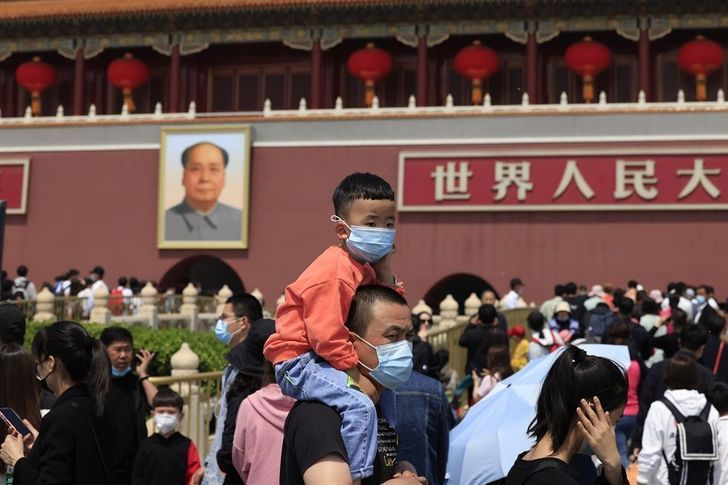
In this May 3 file photo, a man and child wearing masks visit Tiananmen Gate near the portrait of Mao Zedong in Beijing. China's ruling Communist Party announced Monday that it will ease birth limits to allow all couples to have three children instead of two to cope with the rapid rise in the average age of its population. AP-Yonhap
China announced on Monday it would allow every couple to have three children after its two-child policy failed to boost the country's flagging fertility rate over the past five years. Last year, it dropped to its lowest level since the Great Famine in early 1960s.
But the new measure will have limited effect because the cause of falling births in China has little to do with the restrictions.
The problem with China's falling fertility rate - the average number of children per woman - is due to social and economic factors. As in other parts of the world, the willingness of women to have kids declines as education and income improves.
China's fertility rate has dropped steeply over the past several decades thanks to its controversial one child policy, which was enforced through hefty fines, social pressure and forced abortions and sterilization.
But the birth restrictions are only one factor. It is futile to think an expanded birth quota will dramatically increase the number of children Chinese women are willing to have.
Relaxation of the policy is too little, too late. First of all, a three-child policy is meaningless for those couples who do not want more kids. Secondly, a quota ― no matter how big ― is still a policy aimed at restricting births and so sends a mixed message to citizens in the world's most populous country.
Residents bring their children to play in a compound near a commercial office building in Beijing, May 10. AP-Yonhap
Does the Chinese government really want its people to have more babies or not? If it does, then why not scrap the limit altogether?
For China's millennials and the younger Generation Z ― born between 1995 and 2009 ― a lack of affordable public childcare, rising living costs and grueling work hours are putting off many couples from having children.
A popular new idea among Gen Z is to "lay flat", adopting an attitude of no marriage, no mortgage and no kids. For them, the government's announcement is likely to mean very little at all.
But the message behind the decision, which was announced after a Politburo meeting chaired by President Xi Jinping, is significant.
It shows Beijing is worried about falling births and the demographic challenges facing the country. In essence, it is a calling to young Chinese: comrades, please have more babies.
But before that will happen, many young people will be waiting to see what Beijing can offer financially to help them raise a child.