Hungary's central bank hikes rates by 50 basis points amid inflation worries
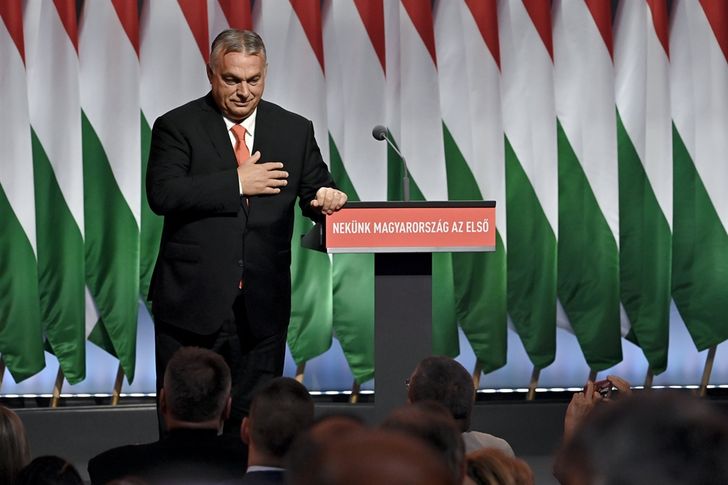
Hungarian Prime Minister Viktor Orban reacts to the applause as he takes to the stage to address the 29th Congress of Fidesz in Budapest, Nov. 14, 2021. AP-Yonhap
Hungary's central bank raised its base rate by 50 basis points to 3.4 percent Tuesday, as expected, after consumer prices grew at their fastest rate in almost 15 years in January and mounting Ukraine-Russia tensions fueled market uncertainty.
The bank, which in June 2021 became the first in the European Union to launch rate hikes amidst the recovery from the pandemic, said it was determined to mitigate second-round inflation impacts and would continue monthly rate hikes as long as needed to curb inflation.
"Inflation risks have increased since the Council's previous policy decision. Inflation will begin to decline later than previously expected," the bank said in a statement.
"Looking ahead, core inflation may pick up further in the coming months. Companies are re-pricing their goods and services at relatively short notice amid strong domestic demand in order to reflect rises in commodity prices and wage costs."
Deputy Governor Barnabas Virag told a briefing that February annual headline inflation could rise above 8% after hitting 7.9 percent in January, as strong re-pricing by companies continues.
He said geopolitical risks have also increased, adding that the bank's quarterly inflation report would be a milestone next month in the assessment of the inflation outlook.
In a Reuters poll last week, 11 of 15 analysts said the base rate would increase by 50 bps to 3.4 percent while three analysts projected a 60-bps hike and one forecast a 70-bps increase to 3.6 percent.
The forint traded at 355.40 versus the euro, firming slightly from 356 after the rate announcement.
Facing a closely fought election April 3, Prime Minister Viktor Orban has granted huge tax refunds to families and hiked pensions and wages in steps expected to boost consumption. They could also fuel inflation, some analysts say.
Orban has also curbed prices on some basic foods, extending caps already in place for energy, fuel and mortgages which dampen inflationary pressures. (Reuters)