Kwak Yeon-soo is a digital editor at The Korea Times creating, editing and curating digital content for the newspaper’s website, mobile app and social media. She previously covered a diverse array of cultural, political and business topics.
Upcycling designer gives wedding dresses, wetsuits new life
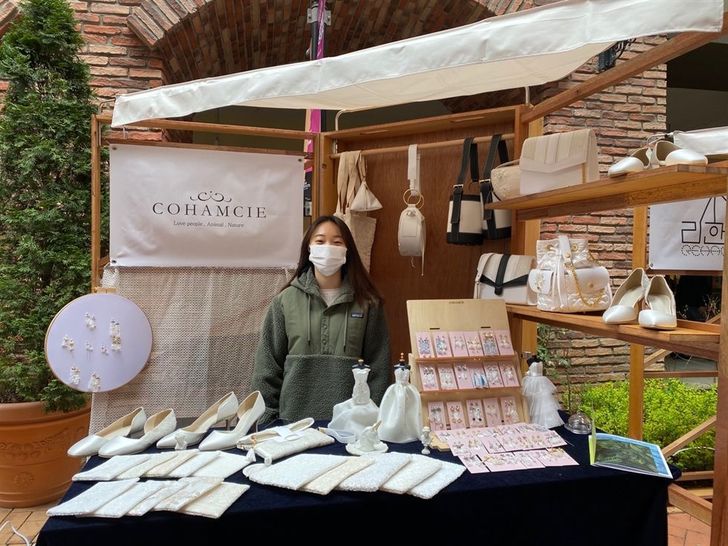
Upcycling designer Park So-young poses at the Upcycling EcoFair held in Siheung, Gyeonggi Province, April 4. Courtesy of COHAMCIE
By Kwak Yeon-soo
By Kwak Yeon-soo
The recent boom in upcycling is a testament to the sustainable fashion trend. Designer Park So-young, who is based in Daegu, is expanding the horizons of what upcycling looks like, turning wedding dresses and wetsuits of “haenyeo,” or UNESCO-designated female divers of Jeju Island, into funky bags and accessories.
Park launched her brand, COHAMCIE, in 2018 after watching a documentary about extravagant gowns being thrown away after only being worn several times.
“I was a college student majoring in textile design when I heard that about 1.7 million wedding dresses are thrown away annually because bridal fashion trends are more time-sensitive compared to everyday wear. The discarded items are sent to wedding photography studios or kept in storage,” Park said in a recent interview with The Korea Times.
Since launching her own brand, Park has transformed more than 40 wedding dresses into 700 fashion items, such as bags, pouches and accessories.
Upcycling wedding dresses is labor-intensive, according to Park. First, she collects wedding dresses from a supplier or a seller. Then, she hand washes the fabric to prevent damage to the material. The dresses are then stripped down while retaining their basic form. Whether the material is needed for bags or accessories, Park uses the entirety of the fabric and makes sure nothing goes to waste.
“The entire production is also a design process,” she said. When asked why she doesn't turn them into clothing items, such as sleepwear or lingerie, Park said people are more sensitive about recycled fabrics when used in clothing than in accessories and footwear.
Park also talked about why she upcycles diving suits of haenyeo. Each year, about 1,000 of these wetsuits are discarded, according to Park. Haenyeo were recognized as a UNESCO intangible cultural heritage in 2016.
“They risk their lives to dive deep in the sea without a breathing apparatus. They hold their breath for minutes at a time to collect conches, abalone and seaweed to support their family. Upcycling wetsuits is a way to show appreciation for their hard work and sacrifice,” she said, adding that she upcycles neoprene, which is a material used in their wetsuits.
On the major challenges that she faced, Park said, “People have prejudices about upcycling, thinking that our products are low in quality because they come from fabrics that had already been used. But that's not true.”
Park said she is glad that many, especially the younger generation, are starting to acknowledge environmental concerns amid the prolonged pandemic.
“I'm concerned about fashion-driven environmental degradation, and I'm glad that a growing number of people are participating in promoting zero waste. We owe a lot to the Earth,” she said.