VIDEO DMZ alive with 6,000 wildlife species
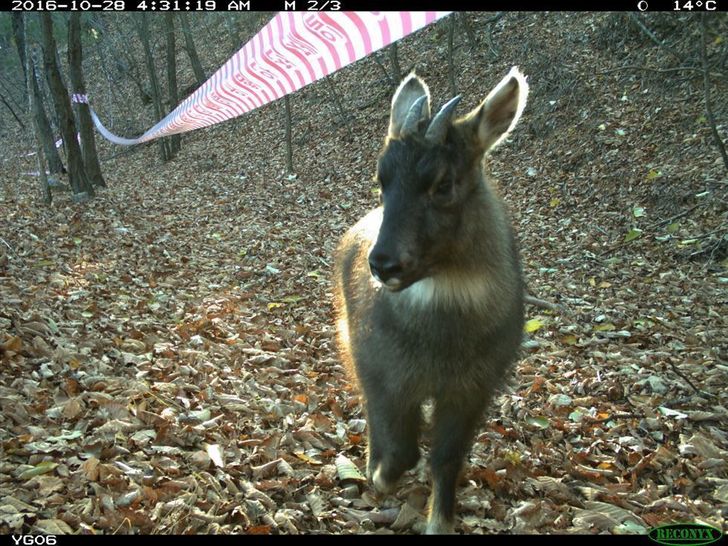
A musk deer is spotted in the Demilitarized Zone (DMZ), the four-kilometer-wide buffer separating the two Koreas, in this footage from a video clip. / Courtesy of the National Institute of Ecology
By Jung Da-min
Nearly 6,000 wildlife species, including 101 that are endangered, live in the Demilitarized Zone (DMZ), according to the National Institute of Ecology.
Video: https://bit.ly/2JK0LZM
“The 101 species of endangered wildlife inhabiting the DMZ account for 37.8 percent of the total 267,” the ecology institute said Wednesday. “It is needless to say the DMZ is an important habitat for endangered wildlife.”
In particular, 18 were identified as first-grade endangered species. They include six mammals and 10 birds, as well as a Suwon tree frog and a small fish called Gobiobotia naktongensis. The Siberian musk deer, Eurasian otters, Golden eagles and Chinese egrets are among the others.
The rare Araneus rotundicornis. / Courtesy of the National Institute of Ecology.
A rare species of spider ― Araneus rotundicornis ― was spotted in June last year in some areas of Yeoncheon County, Gyeonggi Province, near North Korea. The spider was last seen at Worak Mountain in 2006.
The institute has been doing research since 2015 in five regions of the DMZ divided by their characteristics. It will continue to build species information until next year.
This map shows the five-year ecological research of the DMZ by the National Institute of Ecology. The study divides the DMZ into five areas. / Captured from the National Institute of Ecology's YouTube Channel
The data released Wednesday on the 5,929 species in the area is based on results of research between 2015 and 2017 and data accumulated since 1974.
Last year's research was conducted through eight routes in the western plain area that covers 178.8 square kilometers.