Microchip that will save your memory
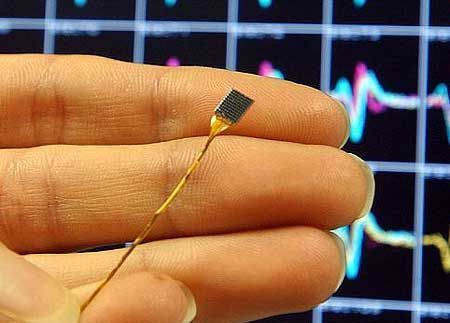
A group of U.S. researchers believe that a microchip that will help create memories in damaged brains could be implanted into human volunteers in the next two years.
The scientists from the University of Southern California, Wake Forest University, and others, have been looking into the hippocampus _ the part of the brain that is vital in forming long-term memories _ for around a decade.
They believe that they have worked out how memories are made, enabling the production of an implant that could aid people with localized brain injuries, stroke victims and, ultimately, Alzheimer's.
As reported by CNN, the researchers have already experimented on rat and monkey brains, proving that brain messages can be replicated by electrical signals from a silicon chip.
The group thinks that a memory device that could reproduce memory processes will be available to patients in five to ten years.
Ted Berger, a neuroscientist and biomedical engineer at the University of Southern California, told MIT Technology Review, “We're not putting individual memories back into the brain. We're putting in the capacity to generate memories.”
The researchers have focused on the hippocampus, which sits deep inside the brain and consolidates information from short-term memory to long-term memory.
They hope that a future implant could copy the brain's neuron messages with signals from an electrical chip.
Berger said to CNN, “I never thought I'd see this in my lifetime. I might not benefit from it myself but my kids will.”
The ultimate goal would be treat people suffering from Alzheimer's, but this would require more research as that disease affects multiple parts of the brain.