Lone Star: An uncomfortable truth
By Ryou Hyo-sang
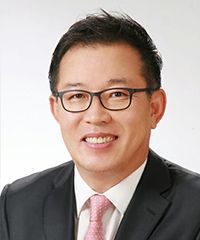
In October 2012, I wrote a book titled “Lone Star: An Uncomfortable Truth.” Hana Financial Group's acquisition of Korea Exchange Bank (KEB) had been decided in February that year, and Lone Star, which was involved in numerous lawsuits in Korea, sent a notice of intent for arbitration through the International Centre for Settlement of Investment Disputes (ICSID) against the Korean government in May.
Despite the negative public attention on suspicions surrounding Lone Star's investments, I decided to write a book on Lone Star because I was concerned about the dangers of false interpretations and generalizations regarding the private equity industry without concrete evidence. It was also intended to help lay the foundation for a more objective discussion by studying and analyzing the impact of investment activities of foreign capital and private equity on the domestic economy.
Since then, the Korean government was sued by Hanocal (over Hyundai Oilbank) in 2015, Dayyani (over Daewoo Electronics) in 2015, Elliott Management (over Samsung C&T) in 2018 and Schindler Holding (over Hyundai Elevator) in 2018.
On Aug. 31, the ICSID Tribunal delivered the ruling on the Lone Star case. Even if it is uncomfortable, we need to carefully review the meaning of the arbitral award from a perspective based on global standards, understand the takeaways from the case accurately and take measures to make improvements where possible for the future.
First, the basis for the decision of the ICSID is the terms of the Bilateral Investment Treaty entered into by Korea and Belgium-Luxembourg Economic Union (BLEU), which took effect March 27, 2011. According to the Ministry of Foreign Affairs in May, Korea had signed investment treaties with a total of 99 countries, 84 of which are still in effect.
Now, there are only a few countries with which Korea has not yet signed an Investment Guarantee Agreement (IGA). The government needs to thoroughly review the contents of the agreements, check for any adverse provisions and revise them, if necessary, to proactively manage potential risks.
Second, it should be noted that according to the tribunal, the Financial Services Commission's delay in approving the sale of KEB was not within its authority, and therefore, was a violation of the duty of fair and equal treatment. The “inaction” (negligence, omission) or the act of delay was viewed as an “action” of violation.
The reason for the Korean government's loss was that the tribunal viewed the failure to act as a violation. In the future, government officials need to be familiar with the contents of the international agreement and treat the terms of the IGA as domestic law to carry out a more active administration.
Third, investor-state dispute settlements (ISDS) operate under a “single trial system,” with arbitrators rendering a binding decision. Experts say that while Korea can apply for an annulment, the grounds are very limited, therefore it is unlikely to be successful. The Ministry of Justice announced that it will apply for an annulment but it is expected to take more than a year for a committee to reach a decision and the delayed damages will continue to increase during the proceedings.
The government should not make decisions driven by public sentiment that are intended to avoid criticisms, which are only temporary. The probability of getting an annulment should be judged carefully and objectively. Public officials should remember that making unwise decisions or blaming others for negative results could cause more damage to the public.
Fourth, as an investor in the global market, the government needs to think like a global citizen. Lone Star's only goal as a financial investor is to maximize profits for itself and its investors. In accordance with the laws and principles of the IGA, it is only seeking to protect its rights under the treaty. Lone Star is not the only private equity firm to profit in Korea.
The Carlyle Group, a U.S. private equity firm, made significant profits and paid no tax in accordance with the tax treaty when it acquired Hanmi Bank in 2000 and sold it to Citibank in 2004, as did Newbridge Capital when it acquired Cheil Bank in 1999 and sold it to Standard Chartered Bank in 2005.
The Korean financial and private equity markets have achieved remarkable growth. The private equity market began growing in Korea with the implementation of the Capital Markets Act in 2005. The National Pension Service's investment in private equities has increased more than 10-fold ― from 2007 to 2021 ― and has invested as much as 35 trillion won in 2021. But it is the U.S.-based Carlyle Group and Blackstone that have received the most investments from the fund, and more than 70 percent of the amount from the pension fund is invested through overseas-based private equities.
Korean companies have arrived at a point where they can join hands with domestic and global private equities to drive future growth. To have unrealistic expectations from private equities and to mislead the public is to be ignorant of the harsh reality of the global investment market. It is time for Korea to focus on understanding global standards and enhancing its investment performance to match the top 10 global economic powers.
Dr. Ryou Ho-sang is president of Unicorn Business Institute.