Quintuple-faced Putin's barbaric war
By Heo Mane
The overall situation in Europe is getting worse every moment, every day, every week and every month because of Russian President Vladimir Putin's unlawful and inhuman war.
It is rightly termed a barbaric war, indiscriminately killing Ukrainian civilians and other innocent people. U.K. Prime Minister Boris Johnson rightly defined this war as “barbaric tactics.”
In the writer's opinion, Russian troops seem to rather destroy civilian lives and their facilities, including military ones, to inflict mental shock on Ukrainian civilians. In recent months, they have even bombarded hospital buildings specializing in pediatrics and obstetrics.
In the latest phase of the war, they did not hesitate to attack the Zaporizhzhia nuclear plant. This attack can lead any time to a nuclear war that can kill an unthinkably large number of people not only in Ukraine, but also in much wider parts of Europe.
Viewed from these possible results, Putin's war is not just a matter for Russia and Ukraine, but also for all of Europe and the world.
Putin has been long advised and influenced by his foreign policy and security adviser Sergey Karaganov. Karaganov is the architect of key concepts in Russian foreign policy based on “constructive destruction” also known as the Putin Doctrine. He used to advise Putin on the concept of a “Greater Eurasia” and also a “Closer Partnership with China.” He often told him that the West is putting a nail in its own coffin.
According to his original motives, Putin's war can thus be seen as a quadruple-faced war. First, Putin has feared an increasingly democratized Ukraine. He thinks that such a Ukraine would intimidate modern Russian despotism, in the end putting Putin's regime in jeopardy one day.
Moreover, he has been on alert for the possible deep infiltration of Western values. He has kept his eyes on a strategic encirclement of Russia by the U.S. and NATO. From a long-term perspective, such values might have a negative impact on Russian security.
Second, Putin has particularly feared that Ukraine would become a member state of NATO. Its membership in NATO would eventually cause greater instability in Russia that caused the collapse of the Warsaw Pact at the beginning of 1991.
To be frank, Mikhail Gorbachev's policy of openness and restructuring ignited popular uprisings in Eastern Europe. The Warsaw Pact had been a bulwark to the peace and security of Eastern Europe, including Russia. The pact has long disappeared, being integrated into the European Union and NATO.
But such shifts were made through a series of agreements between the EU and the old Warsaw Pact countries. Putin may have feared that such instability could reverse the status quo that has maintained peace and stability in Russia.
It has been therefore perceived that confrontations such as local wars, territorial disputes, border clashes or uprisings would occur as witnessed during the early 1980s and ensuing years.
Third, Putin has dreamed about practically controlling the Crimean Peninsula, although annexed by Russia in 2014, and the whole Donbas region. He has hoped to protect and reign over the two republics ― Luhansk Republic and Donetsk Republic.
His dream may be seen as a preventive measure against the “Nazification” of Ukraine. Effective control of the two republics and the practical management of the Crimean Peninsula have been seen as effective tools to foil the so-called “Nazification.”
He has been long caught in a phobia of decoupling Russia from the West through the strategic solidarity of the EU and NATO. From this standpoint, he may have thought that he would fail to realize a “Greater Eurasia.” It was, however, his big mistake to recover the past Soviet glory by means of a barbaric war.
Instead, he lost the stable buffer zones to Russia such as Sweden, Finland and later Denmark, which demanded to be integrated into the orbit of NATO and the EU. The buffer zones have helped Russia protect its long borders from a potential further eastward expansion.
The barbaric war goes against the era of globalization based on global supply chains that have maintained world peace and common prosperity. It already has destroyed much of the global supply chain. As a result, the world economy faces a long recession, delivering a heavy impact on everyone's normal and calm lives.
Fourth, he has thought that the EU and NATO have, in his eyes, been the hostile partners which one day would stand directly in the way of realizing a “Greater Eurasia.” Launching his barbaric war is seen as preventively removing hurdles to reach that dream. Obviously, it is a miscalculation.
Fifth, he has been opposed to the appearance of an economically stronger power of Ukraine that can be a strong competitor to Russia. Ukraine is a potential economic power because it has a vast farmland and industrial capacity.
In a nutshell, Putin needs to understand that the barbaric war will only cause civilian massacres and massive destruction to Ukrainian cities, but it won't maintain peace and prosperity for both the EU and Russia.
It should be kept in mind that the six-month-long barbaric war could veer into a nuclear war, if it is not stopped now by the U.N.'s peace diplomacy.
I would like to remind people around the world at this point of the appeal made by U.N. Secretary-General Antonio Guterres: “Putin's attacks on the Zaporizhzhia nuclear plant are suicidal.”
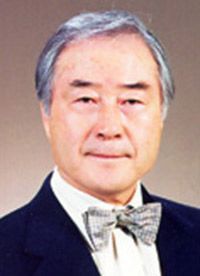
Professor emeritus Heo Mane is former president of the Korea Society of Contemporary European Studies.