Who will be next US ambassador?
By Paul Tyson
The Korean public is understandably puzzled why the Biden administration has not yet announced a U.S. ambassador to Seoul nearly a year after its inauguration. It gives the impression that Washington is not terribly interested in what is happening on the Korean Peninsula.
Not only has no ambassador nominee been announced, but Sung Kim, the former U.S. ambassador to Seoul, is now doing double duty as both the U.S. special envoy on North Korea and ambassador to Indonesia. In addition, no one has been nominated as the U.S. special envoy on North Korean Human Rights Issues since the end of the Obama administration nearly five years ago.
As of last week, the Biden administration had nominated 83 ambassadors while 32 ambassadorships are still vacant. In Asia, the only ambassadorial nominations remaining open were Korea, the Philippines and Thailand ― all three of which are key strategic allies of the U.S.
But this is not the first time that there has been a significant delay in Washington naming an ambassador to serve in Seoul. It took the Trump administration 16 months before it nominated Harry Harris to replace Mark Lippert as U.S. ambassador.
Seoul may have to wait a while longer before it greets its next U.S. ambassador, despite the benefits of having one in place. The U.S. and Korea are strong allies with deep relations when it comes to defense, economics, international affairs, cultural ties and academic studies. Each side has experts qualified to understand and work with one another. This should be a no-brainer. It should not be that hard. But it is.
The United States' appointment of its ambassadors is subject to a domestic interaction of politics, personalities, U.S. Senate tradition and the placement of nominees in the confirmation process.
Getting ambassadors confirmed by the Senate is especially fraught right now because of the deeply partisan divide that has gripped Washington. Only 13 of Biden's ambassadorial nominees have been confirmed.
Moreover, the confirmation of the nominees already announced for China, Japan and India are likely to take precedence over whoever is eventually nominated for Korea since these three countries are considered more important from a U.S. foreign policy standpoint.
What is likely adding to Biden's calculations about who to name for the Seoul post is that the confirmation of his nominations for key State Department posts have been held up by a Republican blockade in the Senate led by Senators Ted Cruz from Texas, Josh Hawley from Missouri and Marco Rubio from Florida. Working together, they have stalled the confirmation process of many senior State Department officials by putting a hold on Senate approval of them.
Cruz began this campaign because he wanted the resumption of U.S. sanctions on the Nordstream II gas pipeline from Russia to Europe that had been waived by the Biden administration. Rubio has blocked the confirmation of Nicholas Burns as ambassador to China because he is concerned about Chinese influence in Latin America. Meanwhile, Hawley is demanding the resignation of the secretary of state and the secretary of defense for the sudden withdrawal of U.S. troops from Afghanistan
Korea has been down this road before. Former Arizona Senator Jon Kyl put a three-month hold on the nomination of Sung Kim as ambassador to Korea in 2011. He was fine with Kim but wanted to object to aspects of President Obama's North Korea policy. He only lifted his hold on Kim as a courtesy to President Lee Myung-bak when Lee made a state visit to Washington.
The result is that President Biden and Secretary of State Antony Blinken may have to take into account someone that is acceptable to the Senate Republican trio after they dropped their hold on several nominees. Cruz and Hawley allowed the confirmation of Julianne Smith as ambassador to NATO after getting a commitment that the U.S. would push for increased defense funding from allies.
Cruz also cleared the confirmation of former Senators Ken Sanchez (Mexico), Jeff Flake (Turkey), Tom Udall (New Zealand) and the widow of Senator Ted Kennedy (Austria) as a “Senate courtesy.”
That would suggest that the easiest way for Biden to get his ambassador to Seoul would be to pick another former senator. But the more likely option is the appointment of another career State Department diplomat.
Meanwhile, the U.S. Embassy in Seoul will continue to be led by the current Charge d'Affaires ad interim Christopher Del Corso, a career diplomat who served previously as deputy chief of mission in Seoul. But he does not have the stature and influence of an ambassador and a confirmed ambassador is important to have. Let us hope that the next U.S. ambassador will arrive in Seoul before the new Korean president takes office in May 2022.
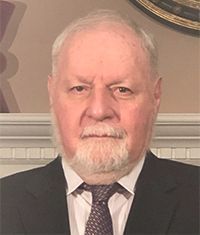
Paul Tyson is a retired U.S. diplomat teaching diplomacy and government at New England College.