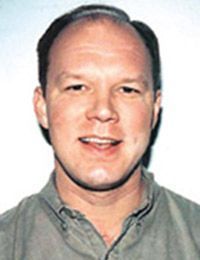
Bernard Rowan is an associate provost for contract administration and professor of political science at Chicago State University.
Free, full, and fair elections
By Bernard Rowan
One of America's most consequential elections looms this November. Many people support Trump. Many people support Biden. The coronavirus pandemic, police abuse, concerns about racial and economic justice, and a wobbling economy all stand as major issues. Trade with China and peace on the Korean peninsula are important issues too. Korea's next election isn't until 2022. However, one already can glean the names of possible challengers. Those taking up the mantle of Korean politics from left and right should appear in a few months.
I hope South Korea will continue to develop her practices for ensuring free, full, and fair elections. Goodness knows America needs to do the same. These days, I begin to think of the challenges to running national elections in a federal as opposed to unitary government. A federal government divides powers between national and state governments through written constitutions. A unitary government lacks significant local autonomy, including for elections. I think 50 states and nearly one hundred thousand localities must work together to carry out America's November presidential election. What a colossal headache compared with a unitary government such as in South Korea!
America could take a page out of South Korea's playbook and apply it in her different context. Amid COVID-19, Korea conducted a national election that saw its highest turnout since 1992. Amazingly, over 65 percent voted. The vast majority voted early, including 12 percent voting by “home voting.” Drive-through voting stations also grew in use and popularity. Lawfareblog.com, which has partnered with the Stanford-MIT Health Elections Project, has an excellent story on the subject written by Miye D'Oench and Axel Hufford.
The first principle of voting in a democracy is that it's a free individual choice. The second principle is that elections feature a real contest among candidates. A real choice occurs. Also, the election should provide a neutral means of selecting whichever candidate one prefers. The method of balloting must provide safeguards against double-counting, proof of voter identity, and other safeguards against fraud.
In South Korea, with 14,000 polling places, the Lawfareblog.com article notes that over 500,000 people joining in disinfecting the stations, and 20,000 extra poll workers staffed voting places. Many safeguards occurred to prevent spread. What a success, conducted amid the nation's response to the Coronavirus pandemic! South Korea invests in the basic mechanics of a democratic political culture ― free, full, and fair elections.
In the United States, sadly, we see a different mix. The tiresome major debate concerns whether the Post Office can handle the mail-in ballots' volume. Some of the candidates and their supporters argue that mail-in balloting is subject to widespread fraud. Not enough work to make possible the greatest ever turnout, applying good practices such as those of South Korea. Instead, Americans witness posturing and not-so subtle efforts to depress voter turnout. A lower voter turnout in elections where one candidate is the incumbent typically favors the incumbent. In America's November election, Biden has good name recognition. It may not be as great a variable.
I didn't find the total spending of South Korea on this election, but it had to be significant. Democracy today isn't cheap, and those who fail to pay for it threaten to compromise elections' integrity and the solidity of the nation. A nation has the wrong priorities unless it invests in voting. Inadequate investment results in only some of the people, but never enough, having a say in the results. Over the last 50 years, state and local governments in the United States have not developed far overall with investing in democracy.
Much more work remains. We could not do better than mirroring the practices that South Korea used this year. In a federal government structure, creating the consensus to invest is much more challenging than at first sight. However, regardless of which candidate a voter is supporting, state and local authorities should work together to create 21st century voting practices that work. We know that Russia, North Korea, and other backwaters pray we don't!
Bernard Rowan (browan10@yahoo.com) is associate provost for contract administration and professor of political science at Chicago State University. He is a past fellow of the Korea Foundation and former visiting professor at Hanyang University.