INTERVIEW Stopping Korean-Japanese relations drifting further apart
By Hwang Jae-ho
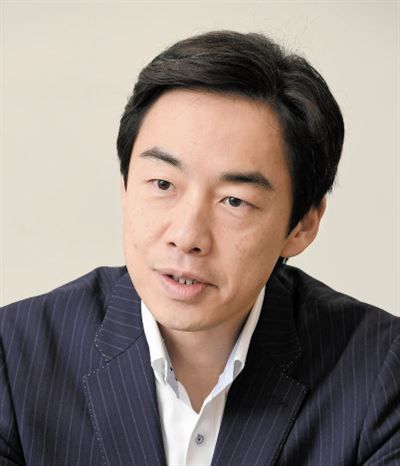
Nishino Junya
Relations between Korea and Japan seem to be close and distant at the same time, especially these days. There have always been difficulties between the two, but since the beginning of the Abe administration in 2012, relations are going through their toughest and coldest time yet. Bilateral exchanges between the governments have been limited and sporadic while civil exchanges have felt pressured to shy away from the spotlight.
To discuss the past, present and future of this complicated relationship, I sat down with Professor Nishino Junya of Keio University, the director of the Center for Contemporary Korean Studies. Throughout the interview, Professor Nishino shared his honest views on issues surrounding the recent development of Korean-Japanese relations.
Q1) How would you evaluate Korean-Japanese relations?
A) There have been issues surrounding history in the past, but they have been managed with mutual consensus to prevent the worst-case scenario. However, the current Japanese government and the influencers think that “Korea cannot be trusted any longer.” And it is not only because of the court ruling on Japanese “comfort women” compensation but also the recent controversy regarding the radar issues between the two militaries. There has been some disappointment surrounding Korea's argument that blurs the focus of the discussion by focusing on the close-proximity flight issue.
Q2) There has been an increase in the possibility of Japanese retaliation after the Supreme Court ruling regarding forced labor.
A) If the plaintiffs request measures to liquidate the assets of the foreclosed Japanese businesses, they will suffer visible damages. Then, it would be very hard for the Japanese government not to do anything about it.
Q3) How does the current conflict between the two states differ from the existing conflicts surrounding history?
A) The difference is that the ongoing conflict is the by-product of a structure that was constructed through the qualitative changes and the different perspectives in the international community of the two states. During the Cold War and before the democratization of Korea, Korean-Japanese relations were limited to political-diplomatic matters, making them easier to manage. However, today they have become highly complicated due to the inclusion of civil societies. The involvement of civil societies is positive in that it stimulates exchanges between the citizens, but it also makes it easier for the relations to be volatile, by making the governments swayed by public opinion or public sentiment. Also, there is a fundamental difference between Korea and Japan when it comes to how to accept and react to the grand changes ― that is the rise of China, as we have seen former President Park Geun-hye on the Tiananmen Square watchtower. This difference works as the driving force for increasing the distance between Korea and Japan.
Q4) Are there any political and economic elements to the increasing distance between the two?
A) Korea became proud as one of the influential states in the international community due to economic growth. Japan, on the other hand, has lost its confidence after the long depression called the “lost 20 years” and in 2011 the Great East Japan Earthquake. The economic and military rise of China in the 2010s also is a factor that makes Japan less confident. The Abe administration succeeded in getting a second term by taking advantage of this situation. The changes in the psyches of Koreans and Japanese led to the changes in bilateral relations. The intense conflict between progressives and conservatives in Korean politics is one of the elements negatively affecting Korean-Japanese relations. The ideological conflict often leads to the historical disputes about the basis for the legitimacy of Korea, affecting the relationship between the two countries.
Q5) A few weeks ago, Kim Jong-un met President Vladimir Putin in a North Korea-Russia Summit. Kim has met all the leaders from South Korea, the U.S., China and Russia, with Prime Minister Abe remaining.
A) Prime Minister Abe has repeatedly said he is ready to meet Chairman Kim since last summer. However, there is a condition for the North Korea-Japan Summit to take place. That is, the summit itself should contribute to the resolution of the Japanese abductees issue that concerns both parties. If Kim demonstrates a sincere willingness to resolve the abductee issue to push for any progress in North Korea-Japan relations with a long-term perspective, then a Kim-Abe summit can happen any time. The normalization of North Korea-Japan relations will bring the Japanese economic aid necessary to boost the North Korean economy.
Q6) There has been the ascension of a new emperor in May and there also will be a G20 summit in Osaka. Could these two events improve Korea-Japan relations?
A) I hope there will be a Korea-Japan summit on the sidelines of the G20 meeting, but it will be hard to achieve any tangible outcome. There is a chance of talks between Moon and Abe backfiring by demonstrating the different perspectives between the two. Therefore, we need to be cautious.
Q7) Are there any additional comments on the future development of Korea-Japan relations?
A) After the 2010s, the structural changes that both of our countries face, such as social changes and changes in the international order in East Asia, call for “New Korea-Japan relations.” The situation today clearly demonstrates the limitations of the contribution from the active civil societies in maintaining the healthy bilateral relationship. We ― both the citizens and the political leaders ― need to manage the current transition period and to recognize and firmly believe in the vision that we are building a new relationship.
Dr. Nishino Junya is a professor in the Department of Political Science, Faculty of Law and Politics, Keio University, Tokyo. He also serves as director of the Center for Contemporary Korean Studies at Keio University. He was a Japan scholar at the Woodrow Wilson International Center for Scholars, a visiting scholar at the Sigur Center for Asian Studies, George Washington University, and an exchange scholar at the Harvard-Yenching Institute. His research focuses on contemporary Korean politics, international relations in East Asia and Japan-Korea relations. Song Minju, a researcher at the Global Security Cooperation Center, translated the interview.