The San Francisco Peace Treaty and territorial sovereignty
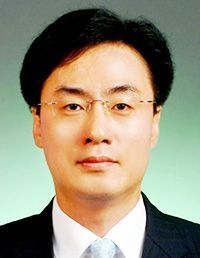
By Doh See-hwan
Today is the 65th anniversary of the San Francisco Peace Treaty with Japan. In 1945 when World War II ended, the U.S. policy toward East Asia was to weaken Japan and build a peace regime with the Soviet Union and China.
Under this premise, the Allied powers formed their territorial policy toward Japan, which gave shape to the Cairo Declaration of 1943 and the Potsdam Declaration of 1945. Having accepted the Potsdam Declaration, Japan agreed on the territorial policy of the Allied powers.
An analysis on the territorial policies of the Allied powers toward Japan until the signing of the San Francisco Peace Treaty with Japan in 1951 can be divided into three periods: determination of territorial policies of the Allied powers toward Japan during wartime (1943-45), continuation of the wartime territorial policies of the Allied powers toward Japan (1945-49) and discontinuation of the policies after the war period (1950-51).
It is particularly noteworthy that the change of U.S. policy toward Japan in 1949 amid the intensifying Cold War was a watershed in the basic approach toward the peace treaty and territorial policies toward Japan, which moved from a punitive treaty to an anti-communist treaty, leaving out the defeated nation’s accountability for war, territorial cession and reparations.
Under this background, the Japanese government has argued repeatedly and constantly that the San Francisco Peace Treaty was directly related to Japanese sovereignty over Dokdo since 1952.
Article 2 (a) of the treaty has been invoked by Japan to claim sovereignty over Dokdo, arguing the paragraph does not specify Dokdo. Reviewing this paragraph based on historical truth and international legal justice has a far-reaching significance in establishing Korea’s territorial sovereignty over Dokdo.
But, paradoxically, when U.S. policy toward Japan changed in 1949, Japan demanded Dokdo be under the sovereignty of Japan in the treaty after its turnaround to an anti-communist treaty, but this demand was rejected, leaving Dokdo not included in Japanese territory.
Furthermore, in April 1951 when John Foster Dulles, the special representative in the peace treaty, made the second visit to Japan, the Japanese government reviewed the treaty drafted by the British government, without the presence of Britain who drafted the treaty, or Korea, one of the stakeholders in the treaty.
Under a unilateral sponsorship of the U.S., it underwent an intensive and exclusive review of the draft peace treaty created by the U.K. Foreign and Commonwealth Office (FCO).
It is worth noting that by admitting the treaty draft of the FCO which prescribed Dokdo under the sovereignty of Korea in an exclusive chance to express its opinion, Japan consequently officially recognized Dokdo as Korean territory.
It is worth reviewing Article 2 of the treaty and international legal principles on the sovereignty of Dokdo from the perspective of a non-party to the treaty.
At the second U.S.-Britain summit to prepare the San Francisco Peace Treaty held in London from June 2 to 14, 1951, the U.S. and Great Britain agreed on the effect of treaties upon third states and granted Korea the rights to the benefits of Article 2 by adding Article 21, instead of recognizing Korea as a party to the treaty.
Besides, the jurisprudence on a treaty establishing the objective regime with the obligations valid erga omnes is not widely accepted. Even if this is accepted, the San Francisco Peace Treaty hardly falls into the category of treaties establishing objective regimes, taking into account the stances Korea, the Soviet Union, China and Taiwan took at that time.
Therefore, Japan’s claim over the sovereignty of Dokdo based on the San Francisco Peace Treaty not only goes against the most basic postwar rectification of giving up the territories illegally “taken by violence and greed” during the imperialistic colonial era, but also infringes on the true peaceful cooperation regime which the treaty intended to establish by redressing wartime wrongs.
The San Francisco Peace Treaty should be able to make all international legal contributions to form a Northeast Asian peace regime in the 21st century of peace and prosperity by overcoming fundamental issues of historical conflicts and bringing about true historical reconciliation.
Doh See-hwan is a research fellow of the Northeast Asian History Foundation.