Bilateral feuds underway
By Lee Sun-ho
During the first quarter of 2017, we have been witnessing three pronounced bilateral country feuds in the global village. The following are the bilateral hostilities among countries concerned as parts of ongoing contemporary world history.
One is the conflict between Malaysia and the Democratic Peoples’ Republic of Korea (DPRK) over the alleged assassination of Kim Jong-nam, the elder half-brother of Kim Jong-un, by use of a VX nerve agent at Terminal 2 in the Kuala Lumpur International Airport on Feb. 13.
Another is the worsened relations between China and the Republic of Korea (ROK) upon the arrival of U.S. Terminal High Altitude Area Defense (THAAD) components and equipment at Osan Air Base in the ROK starting March 9.
A third is the election-related spat between Turkey and the Netherlands that began March 11 after the Netherlands’ ban on admitting Turkey’s Foreign Minister Mevlut Cavusoglu to join in a Rotterdam rally for pro-Ankara expatriate voters for the April 16 referendum on boosting Turkish incumbent President Recep Tayyip Erdogan’s powers.
The wrongdoings of the Pyongyang government in Malaysia, far from its own territory by hiring foreign women assassins, one from Indonesia and another from Vietnam, respectively, brought much concern for the potential effect of terrorism from the DPRK. The assassination, certainly ordered by its 33-year-old leader, has clearly caused not only the breaking of 44-year-old diplomatic ties, and safety disputes with Malaysian authorities, but also contention in China where Kim Jong-nam’s family lived mostly in the semi-autonomous territory of Macau and ostensibly under Beijing’s protection.
Even though China slams the ROK about the U.S. THAAD deployment, it is a self-defensive measure that is absolutely needed to protect the country’s national security and the peoples’ lives against the DPRK’s nuclear and missile threats, as acting President Hwang Kyo-ahn said Jan. 23. Meanwhile, China has been escalating its economic retaliation against the ROK, with the banning of Chinese tourists from visiting here, March 15.
The ROK’s Lotte Group has especially been the target of Chinese hacking threats calling for a boycott of its five department stores and around 100 supermarkets against sales of its food products inside China, due to its decision to provide a golf course located in Seongju, North Gyeongsang Province, for the THAAD installlation. For the sake of its national interest, Russia also seems to be against the THAAD deployment on the Korean Peninsula, while Japan is the opposite.
Upon blocking the Turkish foreign minister’s entry into Rotterdam, Turkish President Erdogan reacted angrily, comparing the Dutch government to Nazi remnants. In response, Dutch Prime Minister Mark Rutte said Erdogan’s remarks were crazy and demanded an apology. Dutch-Turkish diplomatic relations have been cordial since they were first launched in 1812, and the Netherlands is home to some 400,000 people of Turkish origin. Turkey even threatened to scrap a March 2016 migrant deal with the European Union covering Austria and Germany.
Many more questions require clear answers before we can arrive at reasonable rapprochement. There will be more to come over the forthcoming months and years.
Each of the three incumbent crises is painful for both sides, and further extends the butterfly effect to neighboring countries toward unexpected results. Time will tell the final outcome as the wheel of history. We have to wait and see for peaceful results, whether they are wishful or not.
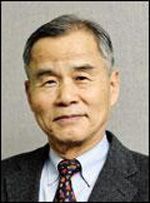
The writer is an ombudsman columnist for The Korea Times in Seoul. Contact him at kexim2@unitel.co.kr.