Memories of petite bribery
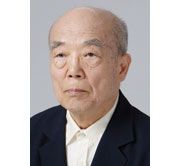
By Nam Sang-so
Bribery is the act of giving money or other forms of value to a recipient in exchange for actions favorable for the person giving the bribe. This seems to be practiced frequently in every country.
Wikipedia estimates a sum equivalent to one trillion U.S. dollars is being traded annually through bribery.
The recent promulgation of the anti-graft law prompts me to revisit my old memories in which I too wasn’t free from the guilt of bending the law in the post war era when the words “Nothing is possible and nothing is impossible” were on everyone’s lips.
A man approached me when I was about to submit my first driving permit application and whispered “I’ll help you get your license.” As I’d heard about this sneaky business that one would need inside help to get through the test, I paid him the sum he requested. In the written exam room, one of the test supervisors stopped at my desk, looked down on my answer sheet for a while and silently walked away. I assumed I’d marked all of the questions correctly.
The driving test was different; a fat bellied instructor sat in the front passenger seat and told me to start the engine. I did and he said I failed because I didn’t put my foot on the brake pedal. I quickly pulled out one bill (equivalent to the current 10,000 won note) from my pocket and dropped it onto the car floor. I was too embarrassed to hand it to him directly. He made up two more blunders on the road and I made two more money drops. When I received my license I was suspicious of its authenticity.
The license was then a black vinyl covered folding type and we new drivers inserted some cash into the folder just in case.
Before the Incheon-Seoul highway was built, the old main road was the only thoroughfare and it was fine fishing grounds for traffic cops. I was soon caught driving on that road having violated no traffic laws that I was aware of. I handed my folded license to the officer and he didn’t fully open it but skillfully pulled out my bill, quickly inserting it into the palm side of his glove. He then handed my license back to me, saluting me as he did with no further ado. I was caught a second time on the same road again for no reason by another cop who wore his police cap low on his brow obscuring his eyes. “Hey look, I was just stopped over there,” I said pointing over my shoulder. Without a word he gestured for me to get lost.
One of my coworkers had the calling card of a prosecutor in the license holder instead of cash. It worked better than cash. Noticing that the folded license holder worked as a cash conduit, it was later redesigned to a clear single flat card currently in use.
Then in 1965 I had to visit five different government windows when I applied for my passport. I knew of course it was wrong to offer cash to a government employee but when almost everyone is bending the law one easily loses a sense of guilt. I received my passport on time.
Things went well in those “Nothing was impossible” days with a petite gratitude. Those poorly paid civil servants probably bought some candy bars for their children when they went home late at night, with some sense of guilt, I’m sure.
When the new anti-graft act which carries a cute female sobriquet Kim Young-ran is enforced starting September 28, the petite hush money practice will be a good old memory.
The writer is a retired architect. His email address is sangsonam@gmail.com.