Korea-China PSA collaboration
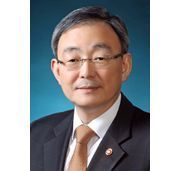
By Choi Sung-joon
The traditional Lunar New Year has come and gone, and once again many Koreans made the annual journey to their hometowns to wish their parents and relatives a happy new year. During the holiday, family members most likely spent time together talking and laughing in front of the TV.
This holiday season, however, saw a new kind of public service announcement (PSA) broadcast. Korea and China each produced a PSA on the common Asian value of “filial piety” which began airing over the holiday.
Korea’s PSA titled “Filial Piety Needs Only a Kind Word” contrasted parents’ love for their children with the latter’s indifference towards the former and reflected on the meaning of filial piety. Lee Kwang-soo, a Korean celebrity popular in China, starred in the ad.
In the Chinese PSA “Stern Father,” a patriarchal middle-aged man is seen as strict towards his employees and children, but transforms into a playful child in front of his mother to make her laugh and fulfill his filial duty.
Although the expressions of filial piety differ, both PSAs portrayed the significance of the value, and I believe they provoked reflection on the meaning of family during the holiday.
Furthermore, although many Korean dramas and variety shows have aired in China, this was the first time a Korean-produced PSA was released to a Chinese audience of 1.4 billion people. This milestone also marked the inclusion of advertising in Hallyu, the Korean wave.
Collaboration between the two countries for PSA paved the way for an exclusive sales contract between KOBACO(Korean Broadcast Advertising Corporation) and CCTV. Providing various communication channels in China, it will open more business opportunities for Korean enterprises who had difficulties entering Chinese market before.
Thirty-five years have passed since Korea’s first PSA “Creating a Prosperous Future through Saving” aired in December 1981. In that time, PSAs have covered diverse subjects ranging from home and family, children and education to environmental protection. During the 1997 Asian financial crisis, PSAs such as “Let’s Rise Again,” “Graduate from IMF Aid” and “Reduce Foreign Debt” gave the Korean people hope and boosted their confidence.
Recent creative and diverse PSAs like “Silver Talk” (2013), “Multicultural Project” (2014) and “Care for the Homeless” (2015) have gone beyond simply raising awareness, to include viewer participation and create real changes in behavior. As a result, awareness of PSAs was 63.2% in 2015. Additionally, a survey conducted before and after viewing a PSA showed a 7.7% increase in viewers’ reported willingness to make behavioral changes related to the content, indicating that PSAs contribute to positive societal change.
For 2016, the Korea Communications Commission (KCC) plans to select subjects which more people can relate to and will create PSAs to inspire and move the public.
A total of 11 PSAs will be produced this year, one more than last year. To increase PSA air time, the KCC will give broadcasters more points on broadcasting evaluations for increasing the ratio in their programming. PSAs will also be played on online and mobile platforms as well as on subways and movie theaters, moving beyond TV to increase exposure.
Furthermore, anyone, young or old, can participate in open contests to create PSAs. By combining PSAs with campaigns, the KCC will implement public interest campaigns that involve the public to produce content that strikes a chord with the people.
Through these various efforts, I believe PSAs will continue to provide effective solutions to the problems our society faces.
Choi Sung-joon is Korea Communications
Commission chairman.