Mom, please sit down for a long time
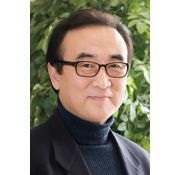
By Yang Dong-hee
Thirty years ago, around this time of year, the Hankook-ilbo Philadelphia Bureau invited approximately 30 members of the Yanbian Performing Arts School from the Yanbian Korean Autonomous Prefecture in China, to perform at a small theater in northern Philadelphia.
It was about seven years before the diplomatic relations were established between Korea and China. Probably the first ethnic Chinese-Korean artists’ tour of major American cities was made possible thanks to a Korean-American Christian pastor living in New York.
The two sold-out shows (I was fortunate to see both) left deep impressions upon the mostly Korean audience for the Yanbian style of traditional Korean performing arts, which was closer to the North Korean style, yet very creative in its own way. “Muldong-i dance” (ladies’ group dance carrying a big porcelain jug of water on top of their heads while wearing tight and figure-conscious northern Korean traditional costumes) was dazzlingly beautiful and something that I had never seen before.
“The dancers were all young, in their high teens, and they all looked innocent and unbelievably beautiful. They were like from another planet.” An American friend of mine told a reporter from the Philadelphia Inquirer, which acclaimed the rare show in the next morning edition.
The more touching moment came when Yanbian’s most famous singer (who had won the Chinese national singing contest in the early 1980s) sang “Mom, please sit down for a long time.” I found out later that they say ‘sit down for long time’ when they wish someone to “live a long life.”
“You can’t sit down if you die,” laughed Hahn Kook-wha, the singer, who was in her late 30s. Asked if the name was real, which means the “Flower of Korea,” she proudly said her name was given to her by her father when she was born. (Years later, I heard she came to Korea and was running a chilled buckwheat noodle restaurant in Nonhyeon-dong, Gangnam.)
Almost every Korean will be able to recite the song “Seonguja.” This is something that runs deep through the Korean sentiment when we think of Korea under Japanese colonial rule, thinking of fellow Koreans living faraway in Yanbian. They had to flee to that cold and barren Chinese land about a century ago. Many of them joined the Liberation Army of Korea to fight for the independence of their homeland.
Taking care of them as a host for three nights and four days in Philadelphia, what saddened my heart most was the young dancers’ dark teeth. They were seen instantly every time they smiled. It was probably because of the contaminated water they consumed. After all these years, I still remember the dark teeth of the young dancers and the beautiful voice and the words of “Mom, please sit down for a long time.”
Some 30 years after the touching performance in the city of brotherly love, I found myself last month watching a controversy over the possible immigration to Korea of Korean-Chinese called “joseonjok” here. First of all, I do not like those who would inconsiderately call Korean residents in China “joseonjok.” Jok means a tribe and in Korean language today it is associated with some kind of negative or inferior image compared to Koreans living in Japan and America.
The controversy started out of the blue in the National Assembly when Rep. Kim Moo-sung, the ruling Saenuri Party chairman, said, “We must accept joseonjok on a large scale.” He was speaking at the government-ruling party’s joint session to work out measures for the nation’s ever-decreasing birthrate.
Kim said, “Our immigration policy should be changed immediately to accept the Joseonjok, in an effort to solve the low birthrate problems.” Negative Internet comments instantly followed Kim’s remarks on this matter. Extreme comments like “Are Joseonjok a baby manufacturing machine?” rapidly spread among the netizens.
(Actually, while South Koreans gave birth to eight babies per every 1,000 people, the Korean-Chinese only gave birth to six babies, according to recent statistics.)
It was about 20 years ago that a Joseonjok writer’s non-fiction book “There is no Korea” revealed shocking discrimination against Korean-Chinese in Korea. Nothing has changed for the past two decades over the images of Korean-Chinese.
In the hit Korean movie “Shinsegye,” years ago, Korean-Chinese people were collectively called “beggars on the street.” In another Korean gangster movie “Whanghae,” Korean society in Yanbian is described as a lawless underground world where killings are a daily routine.
A hit television comedy program in Korea, “Gag Concert,” created stereo-typed characters for the voice-fishing swindlers using Korean-Chinese dialect. Despite strong complaints from the human rights activists, the television program continued for many more weeks. Despite several shocking news items involving Korean-Chinese in recent years, like the multiple murder case by Oh Won-chun, the average rate of criminal cases is lower than their brothers in Korea.
The population of Yanbian Koreans is 2.29 million. In the Autonomous Prefecture as of 2010, and some 40 percent of them are Joseonjok, or Korean descendants. Out of 850,000 Joseonjok, some 200,000 people are living in Korea, Japan, the U.S. and Canada. The Joseonjok living outside China are dubbed by a famed Korean scholar in Japan “Shin (new) Joseonjok.”
According to recent statistics, over 95 percent of Joseonjok students in 1,073 primary schools and 82 percent of Joseonjok students in 211 middle schools in Kilim County, including Yanbian, are learning only in Korean with Korean textbooks. They are Koreans to the bone.
Their passion for art and literature is well above the average. It is really amazing that there are as many as 12 Korean literature journals in that region. Two-hundred-and-eleven members of the Yanbian Performing Art School, won the championship in the All-China Performing Art School Competition years ago.
When the nation was liberalized from Japan in 1945 after 36 years of tyranny, Koreans who fled to China, unlike those who went to Japan or America, were blocked to choose where to live.
It is not a matter of acceptance as a measure to “increase the birth rate” of our home country. It is our top priority to give them a choice to live in this country where they belong.
The writer worked as a reporter for The Korea Times and the Hankook Ilbo-New York, and as a stringe/ correspondent for the Wall Street Journal. He was the first managing director in Korea of the U.S.-based International Management Group (IMG). He can be contacted at dhyang28@gmail.com.