Korea delivers culture shock
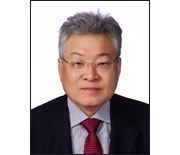
By Spencer H. Kim
In a democracy, how does a society solve its problems, and a country find its place in the world, without honest dialogue and political compromise?
Why do I ask this? Because something happened recently that gives me cause to worry, both about the land of my birth, Korea, and my adopted homeland, the United States.
I left Korea nearly 50 years ago. I love the gifts Korea has given me. In the U.S., I increasingly felt pride from afar as I watched Korea mature and prosper. My fellow Americans increasingly spoke of Korea with respect and sometimes even awe. I felt close to Korea and I traveled here several times every year, for business and pleasure, visiting old friends and making new ones.
I thought I knew the new Korea. But for the first time in decades, on this visit I have lived here for several months straight. And for all the background I thought I had, I am experiencing strong culture shock.
The country is still beautiful, the food still excellent, the medicine modern and Seoul is still one of the world’s great cities, but two things have shocked me.
First is the extreme level of demonization. If someone disagrees politically it seems they must be labeled with some kind of evil invective. Nobody is quietly listening to the other’s viewpoint, they are instead thinking of ways to turn up the volume of the invective to drown out that different viewpoint.
My good friend, former US ambassador to Korea Donald Gregg, puts it well in his new book “Potshards, Fragments of a Life Lived in CIA, the White House and the Two Koreas, the result of demonization" “is hostility fueled by demagoguery, and damage done to all concerned.”
Of course, in my homeland we are also dealing with political polarization, the first step to demonization. It is well documented in a study by Jim Thomson of the prestigious RAND think tank, “A House Divided: Polarization and its Effect,” which concludes that moderate politicians are being squeezed out and, “There is less room for deliberation between the two parties, and public policy decision-making is increasingly driven more by ideology than by objective analysis of which policies, programs, practices, and processes will produce the desired outcomes at the lowest cost.”
Second, I am shocked at how corruption seems to have become so accepted. There is no shortage of scandals these days. Now, corruption is a part of any system involving humans, but in advanced countries it is the exception rather than the rule.
What I see as different is that so many Koreans I meet nowadays seem to think it is normal, that Korea is run by a plutocracy and all the plutocrats are corrupt; it is just that some are unmasked from time to time when they lose some political struggle. But do not expect anything to change, they tell me. Under such a system, many in power do not take action for normal political or economic reasons but rather to protect their ill-gotten gains or to protect themselves.
In the latest World Economic Forum Global Competitiveness Report businessmen cite corruption as the biggest problem in Korea 2.5 times more often than in Hong Kong, three times more than in Taiwan ― and not one businessman complained of corruption in Singapore.
Korea has many challenges as it tries to forge its security policies toward the North, and the region, and as it prepares its society and economy for the coming “Pacific Century.” It is my hope that Korea’s political, economic and societal leaders begin to listen first, think second and talk last, rather than the other way around. And that their conclusions lead to policies that put Korea first and personal interests second.
Spencer H. Kim is CEO of CBOL Corporation, a California aerospace company. He is a member of the Council on Foreign Relations and a co-founder of the Pacific Century Institute.