Good Samaritan Law
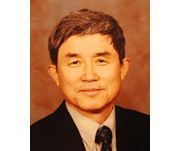
By Seo Youn-seok
Our Boeing 777 airplane was flying over Russian airspace.
“Dear passengers, we have a patient. Is there a doctor or nurse on board?” I heard the repeated announcement.
I got up from my seat and walked toward the middle section of the aircraft and peeked into the space behind the curtain next to the restroom. Four or five female flight attendants and one male attendant were trying to revive an elderly woman who was on the floor. “I am a retired doctor. Do you need my help?” They answered me with a “Yes.”
There was no pulse palpable, nor blood pressure to be measured. I had my stethoscope with me but it was useless because of the loud roar of the engine. The woman’s son-in-law, a gentleman in his mid-50s, was beside her. He informed me that they were heading to Manila, which is their hometown. Since her health had worsened recently, she wanted to return there before it was too late. Her name was Laila (for her privacy, Laila was not her real name) and she was 88 years old.
Quickly asking about her medical history, I tapped her face and called her by name but there was no response. I noticed that she was a very thin lady, but her both legs were swollen. Most likely this was due to poor circulation. They told me that she collapsed on her way out from the restroom. A massive pulmonary embolism or a heart attack could have occurred. We tried everything to revive her for several minutes. And I checked her pupils. They were fixed and fully dilated. We opened the defibrillator box. And after obtaining the permission of her family, we used it as a last resort. But her heartbeat did not return. When I checked her pupils again, they were fully dilated and fixed as before. “I am sorry,” I said. “Your mother-in-law passed away.”
I pronounced her death, informed the family and returned to my seat. I was calm but very sad.
When the captain came to my seat several minutes later, I gave a note about her possible cause of death in both Korean and English, my medical license number, address and phone number. I learned that he was from Cincinnati, Ohio. That was in the same state of Ohio where I had my medical practice for the last 30 years.
After we flew four more hours the airplane landed at Incheon International Airport through a dense fog and thunderstorm. At the gate, we had to wait for about 10 minutes. The captain was communicating with customs officials. Finally the door was opened. At the door there were several uniformed officials with facemasks waiting. They were holding an orange stretcher to carry out her body. Of course all passengers disembarked first.
My recollection is that all the attendants acted very properly. First of all, they maintained her air passages well. During the cardiac massage period, I noticed that they were very good. I did not see any needles, fluid bag, any scalpels or other medical equipment other than what I mentioned. Of course this was not a hospital on the ground. I saw that all attendants acted quickly and logically. I was very proud of their beautiful actions while doing their job in a difficult situation. It may reflect that South Korea is now a fully developed country and has grown up tall in the world community in many aspects, not just in industry, culture and business, but also in terms of morality.
In conclusion I would like to say a few things.
First of all the decision to pronounce her dead was not easy on the airplane. But her pupils were fixed and dilated. Respiration had ceased, there was no pulse and no response to the defibrillator.
Secondly, whenever you treat any patient nowadays, physicians are afraid of lawsuits. Although we heard that a Good Samaritan Law exists, we did not know exactly how it works. That is the main reason why many helpers do not come forward.
But I know that people still help sick people in need at malls, restaurants, concert halls or on the street. They are truly brave and respectable. A friend of mine who is a lawyer in Korea and the U.S. told me that if the action is purely humanitarian and not related to any personal economic interest, and medical care is properly carried out, there is no problem.
Thirdly, the best treatment is prevention. High-risk passengers should be discouraged from taking long flights. And we should encourage every passenger, young or old, to take a frequent walks or exercise during the long airplane trip. And, also, we should develop solid international legal support for such a situation in addition to the Good Samaritan Law.
I strongly support all physicians to be up to date on their cardio pulmonary resuscitation (CPR) education. This was a place where even 911(U.S.) or 119 (Korea) calls were not possible. And I would like to remind everybody that we should help and share things with each other in society because someday a person who needs our help most could be our close neighbors, friends or members of our family.
See Youn-seok is a poet and a retired doctor specializing in ear, nose and throat surgery. Contact him at younseokseo2004@yahoo.com.