A letter from Ho Chi Minh City
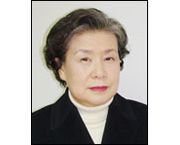
By Chang Soon-hee
An airmail envelope with unfamiliar stamps pasted on it was among the bills in the mail box. The sender was identified as Nguyen Phuong in Ho Chi Minh City, Socialist Republic of Vietnam.
It was addressed to my husband “H” who had been in Saigon for three years during the Vietnam War while I was raising our first baby girl in Korea. Is Phuong a woman’s name? I smelled a woman’s touch.
Years back, Korean Red Cross disembarked a ship load of Vietnamese children at Busan port. They were born during and after the war, and their fathers have been identified as Korean civilians and soldiers. It was a humanitarian project to find their biological fathers.
A good deal of guilty conscious Vietnam veterans and civilians willingly or reluctantly took trains to the bay to meet with their bloodlines. I remember H was restless with the news, but he didn’t go to the welcoming dock.
Should I open it? No, it’s addressed to H. But it didn’t take too long before my suspiciousness mixed with jealousy pushed the etiquette aside. I boiled water in a kettle and let the steam peel off the flap of the envelope. Where did I learn this spy trick?
“Cher Monsieur,” it was a cursive French letter. I needed a dictionary. “I’m a 20-year-old daughter of Nguyen Khan with whom you’ve had a close working relationship at an architect/engineering office at Congly Street in Saigon during the war. My mother was then 25 and I hope you remember her. She had your Seoul address and asked me to write this letter …”
I felt the sky falling.
“My mother often told me about you, Monsieur, that you were a kind Dai Han and a good friend of Monsieur Lee, also from Korea. She says I’m M. Lee’s daughter…”
Oh, I paused for a big breath.
“Mom has written several letters to M. Lee but she has received no answer. My mother is trying to understand but I cannot understand. I’d very much like to meet with my father and Korean half-brothers or sisters … in the snow. People here call me Lai Dai Han rather offensively. Kindly connect me to my father, Monsieur, if you please.”
A photo was included. Wearing a slim pink aodai dress, her long black hair reaching her waist, mademoiselle had well chiseled and pretty features. I sealed the envelope back and left it with the other mail on H’s desk.
He later brought Phuong’s letter to the dinner table and said, “We need to talk.” He divulged Lee’s dissolute Saigon affair. H and Lee had long been friends and they were employed by the U.S. Navy in Vietnam.
“Mr. Lee had a 100cc motorcycle so that Miss Khan could ride on the back seat holding him. She was one of our draftswomen. You see, my motorcycle was only 50cc which did not have enough horsepower to put on any additional load.”
What an absurd way to prove a man’s innocence to his wife.
We visited Mr. Lee the next day. He was terminally ill. “We have read Khan’s letters,” said Mrs. Lee in tears. ``It wasn’t easy but we’ve decided at last to look after Phuong financially. Most of all, my husband misses his Saigon daughter and our two grown up boys are pleased to have a sister.”
H made all the necessary follow up arrangements for the Lees. The last news from Phuong was that she was engaged to marry a Korean engineer working in Ho Chi Minh City.
The writer is now a grandmother. Her email address is ham1940@gmail.com.