Why Koreans love ‘The Solitary Gourmet’ — even though it’s not popular in Japan
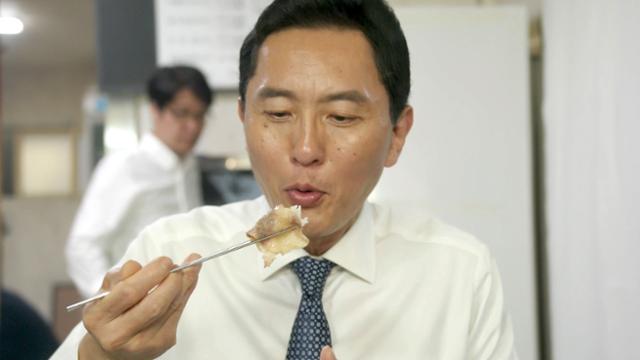
A scene from the Japanese drama "The Solitary Gourmet" / Captured from the drama
The Japanese drama "The Solitary Gourmet" is only modestly received in Japan — but in Korea, it has a dedicated fanbase. Why does the show resonate so differently between the two cultures?
Narukawa Aya, a former cultural reporter for Japan’s Asahi Shimbun who has lived in Korea since 2017, believes the answer lies in cultural differences around dining. In Japan, eating or drinking alone has long been normalized. But in Korea, solo dining still carries social pressure and stigma. That’s why, Narukawa says, Korean audiences connect more deeply with the drama’s protagonist, who confidently enjoys meals alone — a trait that may feel ordinary to Japanese viewers but aspirational to Korean ones.
Having traveled back and forth between the two countries since her early 20s, Narukawa now promotes Korean films and culture in Japan. In her new book, the title of which translates to "Extremely Personal Japan," she explores subtle emotional and cultural distances between the two countries.
Despite her decades-long experience in both societies, food culture remains one of the areas where she still feels a sense of unfamiliarity. Japanese office workers commonly eat simple lunches — such as convenience store rice balls — or pack homemade meals to save money. In contrast, she writes, “I was surprised to see Korean office workers insist on eating lunch together and then going for coffee afterward.” She adds, “Frugal habits are second nature to most Japanese, so they find it fascinating that Koreans regularly spend money on expensive coffee.”
She also observes emotional contrasts in media. “Korean dramas often feature characters who express anger,” she notes, “while Japanese dramas are filled with scenes of people apologizing.”
Narukawa does not shy away from sensitive issues that Japanese readers might find uncomfortable. She addresses with candid honesty topics like Japan’s colonial-era responsibility, discrimination against Zainichi Koreans and the wartime role of the emperor. While she hopes her book will deepen understanding of Japanese people, she also believes it offers Korean readers a chance to reflect on aspects of their own identity that are so familiar, they often go unnoticed.
This article from the Hankook Ilbo, the sister publication of The Korea Times, is translated by a generative AI system and edited by The Korea Times.