California highway to be named after late Korean American colonel
By Yi Whan-woo
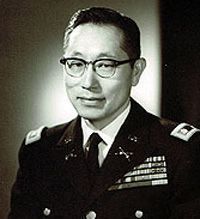
Young Oak Kim
The California State Senate has unanimously endorsed a resolution to name part of a state highway after Young Oak Kim, a late U.S. Army colonel, according to the Overseas Koreans Foundation, Wednesday.
The endorsement speeds up efforts to honor the Korean American posthumously for his “heroic efforts,” after the resolution was proposed in February and the California State Assembly approved it.
Introduced by Assemblywoman Sharon Quirk-Silva, the resolution is to remember Kim, who fought in both World War II and the 1950-53 Korean War, and name a part of I-5 crossing Orange County in southern California as “Colonel Young Oak Kim, U.S Army, Memorial Highway.”
“It will be the first time that part of a U.S. highway will be named after a Korean American,” the foundation said.
The cost of the memorial signs will be covered by donations from Korean American organizations.
“This memorial is just one simple move to remind us of the valor and work of Colonel Young Oak Kim and all veterans,” Quirk-Silva said. “He holds a special place in the Korean American community of California in which he was born. My office will continue to work with the Korean American communities in Orange County, Los Angeles County, and greater California to memorialize the life a great hero.”
Born in 1919 in California, Kim was the son of Korean independence activist Kim Soon-kwon.
During WWII, he fought as a second lieutenant with the 100th Infantry Battalion, a segregated unit of Japanese Americans from Hawaii. He was the only person in the unit who was not a Japanese American.
Kim was offered a transfer due to the Army's fear of ethnic conflict exacerbated by Japanese colonial rule of the Korea Peninsula.
But Kim refused, saying “There are no Japanese or Koreans here. We're all Americans and we're fighting for the same cause.”
He later rejoined the U.S. Army and led a combat battalion during the Korean War.
He was the first Asian-American U.S. military commander and has received the highest honors from the Korean, French and Italian governments.
Among them are two Silver Stars, two Bronze Stars, three Purple Hearts, two Legions of Merit, Italy's Bronze Medal of Military Valor and Military Valor Cross, France's la Legion D'Honneur, and Korea's Moran Order of Military Merit.
Kim was also a humanitarian and civic leader.
During the Korean War, he took care of 500 war orphans, and in 1972, he established a Korean Health, Education, Information and Research Center and a Korean American Coalition to support Korean-Americans and other ethnic minority groups.
He retired as a colonel in 1972.
He died in 2005 in Los Angeles.