President-elect to stake principled stance
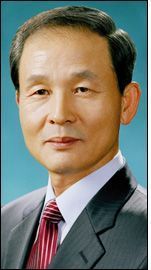
Kim Jang-soo, national security office chief nominee
By Chung Min-uck
President-elect Park Geun-hye named key Cabinet posts for foreign affairs and security, buttressing her strong commitment to “national security” amid high tensions over North Korea’s third nuclear test.
Kim Jang-soo, nominee for the presidential National Security Office (NSO) chief, is considered a hard-liner on North Korean issues who served in the military for 40 years. He maintains a position that there will be no cooperation with the North unless it totally scraps nuclear weapons capability.
The NSO is expected to serve as a control tower in security affairs for Park’s incoming government.
Yun Byung-se, a career diplomat and the architect of the president-elect’s “trustpolitik” doctrine, was recently named the nominee for the foreign ministerial post.
The doctrine calls for engagement with the North while standing firm against any provocations from the North. Experts say his engagement policy is “conditional” which is almost the same as a hard-line stance if the North doesn’t back down from its military provocations.
Yun is also expected to seek close cooperation with the United States by imposing tough sanctions on the North for the latest nuclear test. He has held key posts in the foreign ministry’s North American affairs bureau and Korean Embassy in the United States.
Kim Byung-kwan, nominee for defense minister and a former military official, was deputy commander of the South Korea-U.S. Combined Forces Command giving him much-valued expertise in the military ties between the two allies.
His term in the joint Korea-U.S. military command is considered to have contributed to maintaining solid military ties between the two countries while former liberal-minded president Roh Moo-hyun oversaw a bumpy relationship between Seoul and Washington.
Experts say his expertise in Korea-U.S. military affairs may have helped consolidate the ties between the countries, which are much needed because North Korea has been stepping up military threats with its nuclear test and missile activities.
“Looking at the lineup, it looks like Park has decided to take a hard-line stance against the North in the face of the latest nuclear test,” said Paik Hak-soon, a research fellow at the Sejong Institute. “It is disappointing. In terms of our nation’s long-term interest, engagement policy is needed as well.”
“The nuclear issue is not something that we have full control over. And Washington will seek to impose harsher sanctions on North and ask us to follow suit. But inter-Korean relations are something that we can control. I am worried that Park could follow the same hard-liner stance of the current Lee Myung-bak administration.”
The researcher said the post for unification minister, which is yet to be announced, will be a final indicator on what kind of North Korean policy Park will pursue.
“If Park seeks to engage with the North at least in the long-term, she will name a moderate figure for the unification ministerial post.” Paik said.