Park Jae-hyuk is a seasoned journalist who has provided comprehensive coverage of South Korea's corporate dynamics, economic policies, industry challenges and the global positioning of Korean companies. Based on the articles he has written since joining The Korea Times in 2016, his investigative approach has helped readers understand corporate governance, economic trends and business strategies shaping South Korea’s economy.
Is Macquarie downsizing Korean operation?
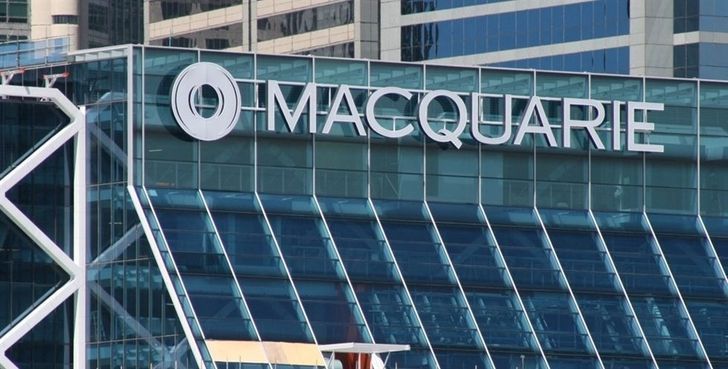
Macquarie Group headquarters in Sydney / Yonhap
By Park Jae-hyuk
By Park Jae-hyuk
Macquarie Group has been mentioned as the latest example of foreign financial companies taking steps to downsize their operations in the Korean market.
According to sources and media reports, Tuesday, the Australian financial group is set to sell Macquarie Investment Management (MIM) Korea to a local private equity fund (PEF). This decision came just a year after Macquarie Bank's departure from the Korean market.
MIM Korea specializes in investments in stocks and bonds. Macquarie bought the asset management company from ING Group in 2013, when the Dutch financial group unloaded its insurance and asset management businesses in Korea.
After changing its name from ING Investment Management Korea, MIM Korea focused mainly on managing assets of ING Life Insurance which later turned into Orange Life Insurance, following its takeover by the local buyout firm MBK Partners.
Orange Life, however, terminated its contract with MIM Korea after MBK sold the life insurer to Shinhan Financial Group. As a result, assets under MIM Korea's management dropped sharply to 1.9 trillion won ($1.7 billion) in July from 12 trillion won last December.
In addition, MIM Korea CEO Lee Kyung-soo stepped down abruptly for unknown reasons in August, 16 months after he took office. Lee was replaced by MIM's head of Asia distribution Bastiaan Jeroen van Buuren, whose term will end in June 2022.
Considering most foreign financial firms here have replaced Korean CEOs with foreign ones before closing up shop here, MIM Korea's appointment of the foreign chief also caused concerns about the Australian asset management company's possible withdrawal.
Macquarie Korea declined to confirm whether or not it has decided to sell MIM Korea, but a source familiar with this issue said the company would be considering “strategic” measures for its unprofitable businesses in Korea.
Marking the 20th anniversary of its Korean subsidiary this year, Macquarie streamlined its businesses here recently.
In March, Macquarie Korea Asset Management, which manages the KOSPI-listed Macquarie Korea Infrastructure Fund, merged with Macquarie Korea Opportunities Investment in charge of managing PEFs.
A year earlier, Macquarie Bank closed its Seoul branch, a decade after its establishment in 2009, in line with the Australian headquarters' plan to integrate its brokerage and banking businesses as part of its structural reform. Back then, most Korean employees left the company, while only a few were transferred to Macquarie Securities Korea, which was established in 2004 after Macquarie acquired ING Securities.
Data compiled by the Financial Supervisory Service showed the number of foreign financial firm branches in Korea dropped from 168 in 2016 to 165 in 2017 and 163 in 2018. The number stood at 163 as of the end of June this year, despite the government's continuous efforts to foster an Asian financial hub here.
Within the past three years, Goldman Sachs, RBS, BBVA, Barclays and UBS shut down their bank branches in Korea. Allianz and Prudential also left the Korean market. HSBC sold its fund administration services provider to the Korea Exchange-owned financial IT firm Koscom in August, seven years after it decided to stop providing retail banking services here.