LG Chem diversifies sustainability efforts
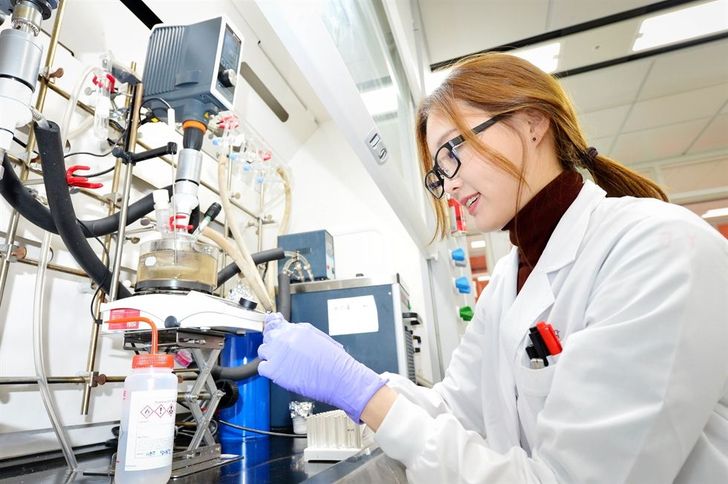
A researcher carries out an experiment at a laboratory of LG Chem. Courtesy of LG Chem
LG Chem is seeking to become the first Korean company to join RE100, a global initiative committed to achieving 100 percent usage of renewable energy, at all of its businesses around the world.
The chemical affiliate of LG Group is a leader when it comes to using post-consumer recycled (PCR) or reprocessed plastics from household or commercial waste for its new products.
The company is pushing to develop its own environmental, social, and corporate governance (ESG) model aimed at creating a virtuous cycle of manufacturing, collecting and recycling plastics.
All of these efforts are in accordance with LG Chem's “2050 Carbon Neutral Growth” strategy announced in 2020 to better cope with climate change, shift to renewable energy faster and enhance recycling practices.
“We placed sustainability as a priority in management of all our business sectors,” the company said in a statement.
To achieve RE100, which stands for Renewable Energy 100, LG Chem plans to keep carbon emissions at 10 million tons in 2050.
It is a demanding task considering the firm already reached the amount in 2019, and unless significant improvements are made, the amount will go up to 40 million ton in 2050.
The firm is making diverse efforts to acquire renewable energy, as seen in deals signed with partners in and out of Korea to use electricity produced through environmentally-friendly methods.
As part of its recycling campaign, LG Chem is developing and supplying to global IT companies high-quality and eco-friendly plastics containing 60 percent PCR polycarbonate.
“We plan to increase the rate to 85 percent,” the firm said.
It will also develop biodegradable plastic materials to minimize environmental pollution and microplastic problems.
The company is also recycling used batteries. One way is to conduct research and develop technologies to predict the remaining life of batteries.
It plans to secure a stable supply chain to extract raw materials, such as lithium and cobalt at domestic and overseas production bases.
“This will increase the stability of material supplies and solve supply chain issues such as labor and environment,” the company said. (advertorial)