LG Chem focuses on building recycling ecosystem
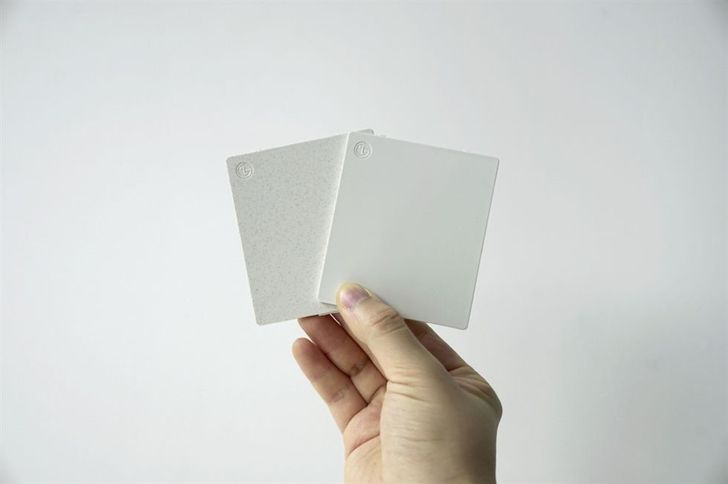
LG Chem's recycled ABS plastic, left, and new ABS plastic / Courtesy of LG Chem
LG Chem is looking to build a sustainable ecosystem for plastic and rechargeable batteries, based on its strategy of sustainability as a growth driver.
The company said Tuesday it believes setting up a virtuous cycle of reusing materials for the company's key products will create not only social but also economic value, pledging it will continue to provide “innovative and distinctive sustainability solutions” for the sake of the environment and society.
LG Chem said it will focus on developing post-consumer recycled (PCR) plastic and biodegradable plastic products.
Recently, the company succeeded in mass producing PCR acrylonitrile butadiene styrene (ABS) plastic in white.
ABS plastic is widely used for car interiors and home appliances as it is easy to process and paint. LG Chem produces 2 million tons of ABS plastic annually, which the company said is the world's largest amount.
To produce PCR ABS plastic, manufacturers collect reusable ABS plastic from discarded home appliances. Since dumped ABS plastics are in a variable condition and are mixed in color, manufacturers produced mostly produced black or grey PCR ABS plastics.
LG Chem said it succeed in mass producing white PCR ABS after it developed a substance that can link the disconnected molecules in used ABS. The company said its original additives enable it to create white recycled ABS, and confirmed that the properties of the recycled ABS are equivalent to those of new products.
Currently, LG Chem is making one white and three black PCR ABS plastic products, but plans to increase the number to seven by adding new white PCR ABS plastics by the end of the year. Through this, the company seeks to consolidate its position in the global recycled plastic market.
The global PCR plastic market is expected to grow an average 6 percent annually from $7.7 billion in 2019 to $10.2 billion in 2024.
An electric vehicle (EV) is being charged from an LG Chem energy storage system using recycled EV batteries in this undated handout photo. Courtesy of LG Chem
LG Chem also plans to commercialize poly butylene adipate-co-terephthalate (PBAT) ― a biodegradable polymer ― in addition to other biodegradable plastic materials by 2024.
In its rechargeable battery business, LG Chem said it is investing in technologies required for recycling used batteries for energy storage systems (ESS).
Generally, an electric vehicle (EV) battery that can no longer be used in the vehicle is either reused for an ESS or recycled for raw materials such as lithium or nickel. Approximately 150,000 to 200,000 kilometers is considered to be the length of an EV battery's life.
For optimal recycling of used EV batteries, LG Chem is focusing on battery life prediction technology, as this can most efficiently reveal the status of used batteries, thus helping makers repurpose them properly.
Also, the company seeks to operate an integrated battery monitoring system, so it can find circumstances that can boost the efficiency of reused batteries.
When these technologies become fully operational, LG Chem expects they will lower the general prices for EVs, because batteries account for more than 30 percent of the cost and recycling them will help carmakers profit from selling used batteries.
When EV batteries are reused for EV charging ESSs, vehicles can be charged at relatively cheaper rates, because the ESS will store cheaper electricity at night and charge vehicles during the day. Unlike conventional electric vehicle charging systems, the power of those ESSs can be improved by replacing batteries, LG Chem said. (Advertorial)