Nam Hyun-woo has worked as a staff writer at The Korea Times since 2013, mostly covering business and politics. He currently belongs to the Business Desk where he covers topics such as emerging tech, AI, ICT and Korea's chaebol community. Prior to joining the team, he was the paper's correspondent for the presidential office of Korea during the Yoon Suk Yeol and Moon Jae-in administrations.
SK, ILJIN clash over battery copper foil plants in Malaysia
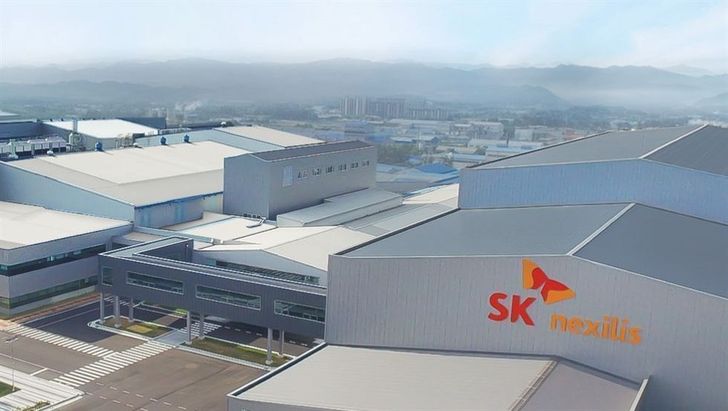
An SK Nexilis plant in Jeongeup, North Jeolla Province / Captured from SK Nexilis website
By Nam Hyun-woo
By Nam Hyun-woo
Copper foil makers SK Nexilis and ILJIN Materials are locking horns over attempts to expand their market shares for copper foil used in EV batteries, exchanging salvos over the SK Group unit's alleged plan to build a plant in Malaysia.
According to industry officials, SK Nexilis has been considering countries including Malaysia and Europe for the site of its copper foil plants with plans to finalize the location by the end of this year.
SK Nexilis was formerly KCF Technologies. It was acquired by SK Group's chemicals unit SKC in June last year for 1.2 trillion won and renamed SK Nexilis in April this year.
“It is true that SK Nexilis is looking into locations in multiple countries with an aim to build new plants, but Malaysia is just one of the candidates and we have yet to settle on a certain country,” an SKC official said. “Our hope is to wrap up the location selection process by the end of this year.”
Rival ILJIN Materials expressed its strong opposition to the plan, saying SK Nexilis was seeking a “free ride” on ILJIN's efforts to explore location matching for copper foil production and build infrastructure.
“Copper foil is very sensitive to temperature and humidity, thus finding the right location for a plant and coming up with a matching manufacturing process is critical for a copper foil maker,” an ILJIN Materials official said.
ILJIN Materials began its investments in Kuching for copper foil production in 2017 and launched commercial operations there in January last year. Since July, the company has been building two more plants in the city through the investment of 300 billion won.
”We believe SK Nexilis has already decided to build new plants in Kuching, in an apparent attempt to free ride on our efforts over the past four years,” the ILJIN official said. “When conglomerates like SK build plants next to ours, worries are there would be employee poaching and subsequent technology leaks.”
SK Nexilis and ILJIN Materials have been in a neck-and-neck race as the world's top copper foil makers. The two companies have already experienced conflicts over the location of domestic plants and subsequent employee transfers.
ILJIN Materials built its copper foil plants in Iksan, North Jeolla Province, in 1989, and then SK Nexilis, which was then LG Metal, set up its plant in nearby Jeongeup in 1996. Due to the proximity of the cities in the same province, the companies had conflicts in the late 1990s as more than 10 ILJIN employees moved to LG Metal.
SK Nexilis said it had no comment about ILJIN's claim because it has yet to choose a location for any new plants. Apart from Malaysia, the two companies are expanding their manufacturing facilities aggressively. In June, SK Nexilis announced that it would invest 120 billion won to build its sixth plant in Jeongeup, just seven months after it decided to build its fifth plant in the city.
ILJIN Materials said recently it had secured a plant site near Budapest, Hungary, and would invest 1.5 billion won to build copper foil plants. Battery makers Samsung SDI has plants in Hungary.
CCP of Taiwan, Lingbao Wason of China, SK Nexilis and ILJIN Materials are the world's top copper foil makers. According to Macquarie Research, CCP's share in the copper foil market last year stood at 19 percent, followed by Lingbao Wason with 16 percent, SK Nexilis with 16 percent and ILJIN Materials with 14 percent.
Macquarie anticipated SK Nexilis and ILJIN Materials would lead the pack by 2025 by increasing their copper foil supply to 128 kilotons and 126 kilotons respectively, outpacing Lingbao Wason's 110 kilotons and CCP's 95 kilotons.