No relief in sight for air carriers in 2020
By Jun Ji-hye
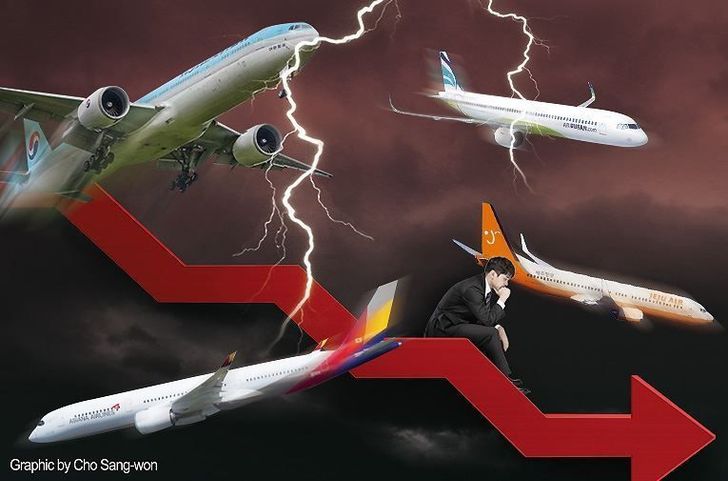
Korean Air, Asiana Airlines and other local air carriers that have suffered lackluster earnings in 2019, are expected to continue to have difficulty this year amid a continuing nationwide boycott of trips to Japan in addition to fluctuating international oil prices and exchange rates, industry analysts said Wednesday
Asiana Airlines and most low-cost carriers were forecast to have suffered an operating loss in 2019, with Korean Air being the only one to make a profit, according to Seoul-based financial data provider FnGuide.
But the national flag carrier's operating profit was forecast at 191 billion won ($163 million), a 70 percent plummet from the previous year.
Asiana Airlines was estimated to have suffered an operating loss of 263.3 billion won, while Jeju Air and Jin Air were predicted to see operating losses of 17 billion won and 13.5 billion won, respectively.
Air Seoul and Eastar Jet are unlisted companies, thus they do not announce their earnings reports, but analysts forecast the budget carriers would, like the others, have suffered operating losses.
Securities companies expect the air carriers to remain in deficit territory in 2020, except for Korean Air, noting that it will not be easy for them to rebound any time soon due to falling demand.
“It is premature to talk about when air carriers' profits will rebound,” said Samsung Securities analyst Kim Young-ho. “We will be able to explore the possibilities of an improvement in air carriers' profits in the latter half of 2020 at the earliest as the number of people going overseas is tending to decrease in general, and the boycott of trips to Japan continues.”
In July, Japan began to impose restrictions on exports of key industrial materials to Korea, triggering an anti-Japan boycott here, under which Koreans opted not to travel to the neighboring country.
Amid such a gloomy outlook, air carriers are scrambling to cope with the worsening business environment in an attempt to speed up a turnaround.
Asiana Airlines said it is replacing aging aircraft with next-generation planes to enhance its competitiveness and improve profitability.
“We are also working to diversify flight routes and planning to convert irregular operations, which have been popular, into regular routes,” an Asiana Airlines official said. “In a bid to maximize passenger convenience, we have adopted various information and communications technologies to check-in bag drops, among others.”
Air Seoul also said it will redouble efforts to secure competitiveness and turn things around at the earliest possible date.
“We suffered a blow due to the issue involving routes to Japan, but we expect our performance to begin improving in the first quarter of the year,” CEO Cho Kyu-yung said, noting that the company will operate new aircraft with wider seats, while maintaining low prices.