Kwak Yeon-soo is a digital editor at The Korea Times creating, editing and curating digital content for the newspaper’s website, mobile app and social media. She previously covered a diverse array of cultural, political and business topics.
Renault Samsung workers rise against union leaders
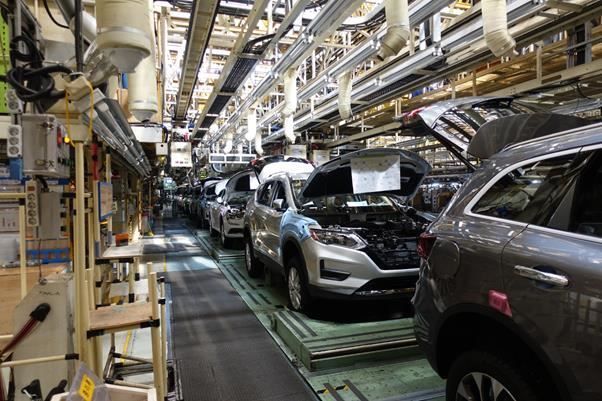
An assembly line of Renault Samsung's Busan plant / Korea Times file
By Kwak Yeon-soo
By Kwak Yeon-soo
A “labor-labor” conflict is flaring up at Renault Samsung Motors as unionized workers are divided over staging a full-scale walkout after wage negotiations with management collapsed Wednesday.
Although union leaders called for an all-out strike after failing to iron out the differences with management, more than half of the workers refused to follow the order. Instead, they returned to work to normalize the operations of the company's main plant in Busan.
This is the first time in Korea's labor movement history that unionized workers have refused to follow orders from the leadership and returned to work.
The division over leaders' brinkmanship tactics is complicating the union's stance to collectively bargain over wages and benefits, according to the company.
“The strike participation rate has been on steady decline, and the union members aren't as supportive of their executives as before,” a company official said.
“Because the majority of the union members have decided not to join the strike, the company will continue to produce vehicles as planned.”
Renault Samsung, however, said it will continue working-level talks with the union to resume negotiations.
Industry watchers said the dissonance is attributed to concerns about job security and production disruption.
“The labor-labor conflict is very rare among unions in the auto industry,” a Korea Enterprises Federation official said.
“But Renault Samsung Motors is faced with an unprecedented crisis, which may lead to a possible plant shutdown. The unionized workers are worried that an unwavering stance may bring some benefits but could eventually lead to them losing their jobs.”
“I've seen cases where about 10 percent of union members defy the union's stance, but more than 50 percent of them refusing to stage a protest is highly unusual,” said Lee Jae-kyo, a professor at Sejong University.
“This shows that union members are becoming more aware of the fact that continuing the labor dispute may lead to production disruption and at worst a shutdown."
The company and the union began negotiations in June last year to sign a wage and collective agreement deal. Following 60 partial strikes, the Korean unit of French automaker Renault halted production at the Busan plant several times resulting in losses.
Affected by the strikes, Renault Samsung's sales fell 36 percent to 67,158 vehicles in the January-May period from 104,097 in the same period of last year.
The continuing labor dispute has also led Renault and its ally Nissan to realign production; while the contract for the Busan plant to manufacture the Nissan Rogue mid-size SUV will expire in September.
Meanwhile, a union spokesman blamed the management for the failure, saying that the company was attempting to divide the union.
“It looks like the company is trying to divide us by claiming that workers are walking away from the union. We aren't going to allow that,” the spokesman said.