Nam Hyun-woo has worked as a staff writer at The Korea Times since 2013, mostly covering business and politics. He currently belongs to the Business Desk where he covers topics such as emerging tech, AI, ICT and Korea's chaebol community. Prior to joining the team, he was the paper's correspondent for the presidential office of Korea during the Yoon Suk Yeol and Moon Jae-in administrations.
Biz leaders issue downbeat New Year's message
By Nam Hyun-woo
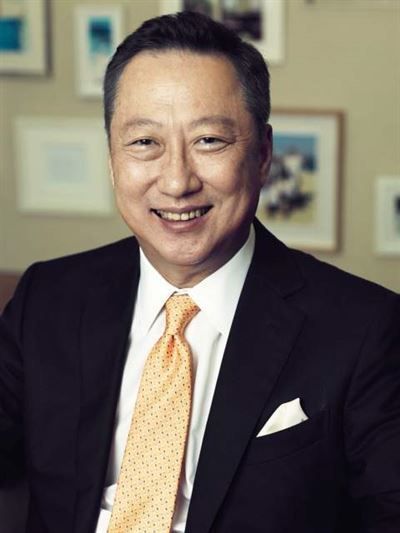
Korea Chamber of Commerce and Industry Chairman Park Yong-maan
By Nam Hyun-woo
Growing concern over the Korean economy next year has been a shared sentiment in a series of New Year messages issued by business leaders over the past week.
They are calling on the Moon Jae-in administration to ease regulations, help nurture new growth engines and take other steps to create a business-friendly environment.
On Dec. 27, Korea Chamber of Commerce and Industry (KCCI) Chairman Park Yong-maan said in his New Year message that “the country's business sentiment is bad, while the economy has failed to set up the basis to address its structural problems and avert mid-term down cycle.”
“Silicon Valley companies could become global enterprises on the basis of systems and market ecosystems which help companies to create new opportunities,” Park said. “We also have to make changes in the paradigm of regulations, laws and systems, so that more domestic companies can attempt to create economic and social values.”
He also added “the current method of increasing the quantitative input of labor and capital no longer works in the era of the Fourth Industrial Revolution” and urged “companies should open up their businesses and lower the barrier for convergence, in order to create new values.”
Federation of Korean Industries Chairman Huh Chang-soo
Federation of Korean Industries Chairman Huh Chang-soo expressed his worries that “2019 will be more difficult than 2018 as major industries such as automobile and steel will suffer from a deteriorating business environment.”
“The most painful of all is that Korea no longer has new drivers to lead its economic growth,” Huh said. “With the Korean economy at a crossroads between long-term recession and further growth, regulation reform is not an option. It's a matter of survival.”
He continued that what companies can do in the overseas market should be available at home too, adding that firms should also do their utmost to create jobs, make investments and find new growth drivers.
Such a view was also seen in the Korea Economic Research Institute's business survey index, gauging companies' sentiments over their business conditions.
Their outlook for January stood at 92.7, which is slightly improved from the 88.7 they forecast for December, but still far below the median point of 100. A reading below 100 means pessimists outnumber optimists. The actual index for last month was 90.2, continuing its 44-month streak of below 100.
Korea Employers Federation Chairman Sohn Kyung-shik
Korea Employers Federation (KEF) Chairman Sohn Kyung-shik also said the country's economy seems to be mired in a downward spiral, despite hopes for improved conditions this year.
“Last year, companies had to endure minimum wage hike and working hour cap, as well as fighting increasing uncertainties stemming from the prolonged trade conflict between the United States and China,” Sohn said.
“Despite hopes for improvements, the so-called 'triple slump' in investments, production and job seems to be looming.”
Sohn stressed that businessmen are in need for encouragement, which is represented by discussions on the “reasonable level of minimum wage hike” which the Korean labor market can shoulder.
Minister of Trade, Infrastructure and Energy Sung Yun-mo also said the country is facing various difficulties including the trade war between the U.S. and China, and slowing global economic growth.
Minister of Trade, Infrastructure and Energy Sung Yun-mo
“Korea's exports surpassed a $600 billion mark for the first time in 2018, but its major industries are chased by emerging market players, while showing lackluster movements in investment and job creation,” Sung said.
He pledged that the government will expedite its efforts on follow-up measures of industrial support plans announced last year, as well as expanding state-led investments on core industries.