Hyundai Mobis to secure orders worth W1 tril. in China
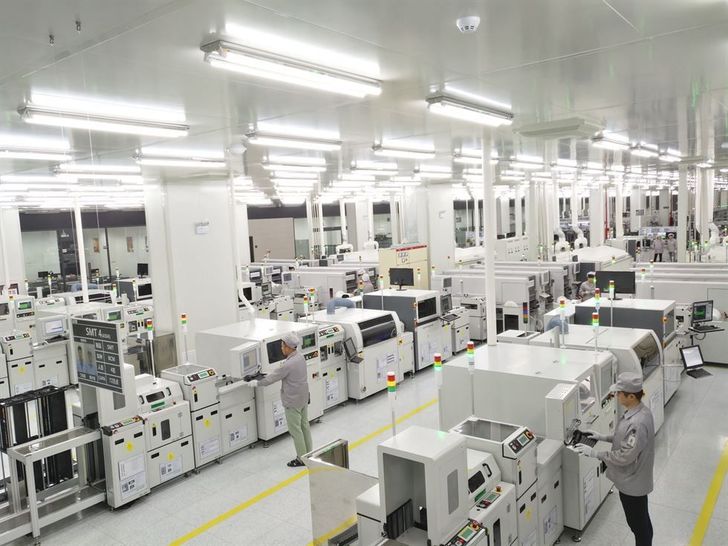
Employees of Hyundai Mobis work at the firm's plant manufacturing head-up displays (HUD) and premium sound systems in Tianjin, northeastern China. / Courtesy of Hyundai Mobis
By Jun Ji-hye
Hyundai Mobis is expected to win more than 1 trillion won ($927 billion) worth of contracts in China this year, the firm said Tuesday.
This means the firm has successfully passed through the difficulties it endured last year caused by disputes between Korea and China over the deployment of a U.S. anti-missile system in Korea.
The company, which is a key part of Hyundai Motor Group's shareholder restructuring efforts, said it has won contracts worth $423 million in China as of this month. The figure is higher by almost 50 percent compared to that of the whole of last year.
The firm said the value of new contracts this year is expected to almost quadruple compared to that of last year.
Hyundai Mobis attributed its growth to its higher value-added advanced products such as head-up displays (HUD), premium sound systems and motor-driven power steering (MDPS) systems. The firm could obtain even more contracts thanks to such products, it said.
“Our contracts to supply higher value-added advanced products to the Chinese market as of May grew 1.5-fold from last year,” a Hyundai Mobis official said.
Hyundai Mobis has recently signed a contract worth $200 million with a Chinese carmaker to supply its premium sound system that will be installed in the Chinese company's major models by 2020.
Hyundai Mobis also signed a contract worth $35 million with another Chinese carmaker to start supplying HUDs next year.
Last year, the company won contracts worth $6 billion with overseas carmakers. The figure is expected to exceed $7 billion this year and $10 billion in 2022, the firm said.
“This year, we expect large-scale, new contracts in North America, Europe and Japan as well as in China,” the official said. “For the medium and long term, we will obtain more than 40 percent of the sales of our auto parts business from other carmakers besides Hyundai Motor and Kia Motors.”
In an April 26 regulatory filing, the firm said 25 percent of its 2025 sales will come from its future technology businesses, including self-driving and connectivity cars, while its parts businesses such as braking and steering will account for 16 percent.