Border tax weighs on Kia's Mexico plant
By Lee Hyo-sik
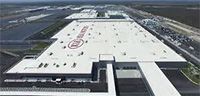
Kia Motors’ plant in Monterey, Mexico / Yonhap
Concerns are growing over Kia Motors’ Mexico plant as U.S. President-elect Donald Trump has threatened to slap a “border tax” on vehicles imported to the United States from the country, according to analysts Wednesday.
Citing Trump’s move to make produced-in-Mexico cars more expensive for American consumers, they say Korea’s second-largest automaker will have to rethink its business strategy in North America.
Last September, Kia opened a plant in Monterey, Mexico, capable of producing 300,000 vehicles a year. It manufactures the K3 compact sedan and other popular models, most of which are shipped to and sold in the world’s largest automobile market.
“The incoming Trump administration will certainly increase tariffs on imported vehicles and take other steps to force automakers, both American and non-American, to produce cars inside the United States,” said an industry analyst, who declined to be named. “What has happened to Ford and GM clearly shows what will happen to other carmakers operating plants in Mexico.”
On Tuesday (local time), Ford Motor canceled a plan to open a plant for assembling its Focus sedans in the Mexican state of San Luis Potosi. Instead, the company has decided to add 700 jobs to its plant in Michigan at the cost of $700 million to produce more electric and automated vehicles.
Ford’s latest change of heart came at a time when Trump is intensifying pressure on American companies not to shift production to Mexico or elsewhere, and instead to operate plants in the United States.
The billionaire-turned-politician is also pressing General Motors to stop importing compact cars to the United States from Mexico, threatening to slap a border tax on the largest American carmaker.
“Kia’s Mexico plant is facing an increasingly uncertain outlook. The automaker built the facility to produce vehicles at cheaper costs, mainly for the U.S. market,” the analyst said. “But if Trump revises the North American Free Trade Agreement or hikes taxes on imported cars, the Korean carmaker will be in a difficult position. It would be less economically feasible for Kia to manufacture cars in Mexico.”
Kia cannot expand its U.S. plant in Georgia overnight, he said, adding that it would take years of planning and require hundreds of millions of dollars of investment if it constructs a second U.S. plant.
“I think when Trump occupies the White House, things will be much more difficult for Kia and other carmakers running plants in Mexico.”
Kia officials say the automaker hasn’t made any changes in the way it does business in North America.
“We are closely monitoring the situation in the United States. But we haven’t taken any action in response to changes in U.S. politics,” one company official said. “We will stick to our initial plan as far as our Mexico plant is concerned.”