Korea urged to revamp biz ecosystem
INKE chief vows to support startups going overseas
By Kim Jae-kyoung
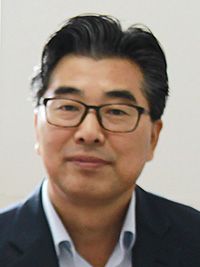
Kim Chul-soo INKE Chairman
SINGAPORE ― The Korean economy has fallen into a low-growth trap due to structural problems, such as low labor productivity, an aging population and sluggish exports.
With new technologies disrupting businesses, the economic growth model and ecosystem led by conglomerates, or chaebol, have lost their competitive edge, failing to provide the impetus for growth in Asia’s fourth-largest economy.
International Network of Korean Entrepreneurs (INKE) Chairman Kim Chul-soo believes that it is time to create a new business ecosystem to help the economy tackle such challenges and ensure sustainable growth.
“Korea should create a new business ecosystem led by strong small and medium-sized firms (SMEs) and venture startups equipped with world-class technology,” Kim said in a recent interview in Singapore.
“The current ecosystem, led by chaebol, focuses on achieving short-term goals. Under the system, SMEs are unable to concentrate on investing in developing core technologies.”
The Singapore-based businessman thinks that for a more effective and productive ecosystem, Korea should bring significant changes to three key areas _the mindset of SMEs, the education system and the government’s support programs.
“First of all, SMEs should show professionalism and workmanship,” he said. “They need to double efforts to develop core raw materials technologies to compete with Japanese and German players.”
According to the chairman, Korea still relies heavily on Japan in terms of core raw materials, with Korean firms importing around 30 to 40 percent of these from Japanese players.
“Korea is good at designing and manufacturing end products but what is really important now is securing core raw material technologies,” he said. “Otherwise, Korea’s dependency on Japan and Europe will intensify further, undermining its competitiveness in global markets.”
Secondly, he called on the government to reform the education system to encourage more talent to work for SMEs. He said Korea needs many vocational education programs to address job mismatch issues and develop more world champions in more areas.
Thirdly, he stressed that the government should come up with a more sustainable, systematic support program for SMEs so they can invest more in research and development (R&D).
“The government’s support program should not focus too much on pushing assembly sides and generating short-term results just to improve GDP figures,” he said.
“In order for Korea to overcome challenges, it is important to set up a more solid ecosystem backed by the development of basic science and SMEs. We can be a real advanced country only when SMEs and venture firms become the backbone of the economy.”
Reinventing INKE
Kim, who took the helm of INKE as ninth chairman in November, 2015, said INKE will increase efforts to play an important role in creating a new ecosystem by supporting overseas expansion of promising SMEs and venture startups.
“Most INKE members are local market experts doing business there for several years,” he said. “They are young entrepreneurs, scientists, consultants, lawyers and venture capitalists in high-tech industries.
“Our members have rich experience and know-how and they are combining to build an extensive global network. We now seek to become a hub for Korean venture startups abroad.”
Established in 2000, INKE has 78 chapters in 47 countries, with over 1,500 members. The sales contract through INKE amounted to $500 million in 2015. INKE is an affiliate of the Korea Venture Business Association.
Kim, 54, who runs Digilogtech, a Singapore-based firm with sales of $200 million, has an ambition to increase the number of chapters to 100 by 2017. He worked for a Samsung subsidiary’s branch in Singapore before he started his own business.
Kim said he wants to expand INKE’s role by helping Korea’s entrepreneurs open businesses abroad and providing mentoring services to young people and SMEs.
“Our original role was to support the export of small venture firms by using our overseas network,” he said. “However, we need a new role in the new world of business.
“Supporting the opening of venture startups abroad is now our top priority. I’d like to create a program that can help the youth start their businesses abroad regardless of location.”