Park Jae-hyuk is a seasoned journalist who has provided comprehensive coverage of South Korea's corporate dynamics, economic policies, industry challenges and the global positioning of Korean companies. Based on the articles he has written since joining The Korea Times in 2016, his investigative approach has helped readers understand corporate governance, economic trends and business strategies shaping South Korea’s economy.
Woori suspends sales of ultra-high-risk products
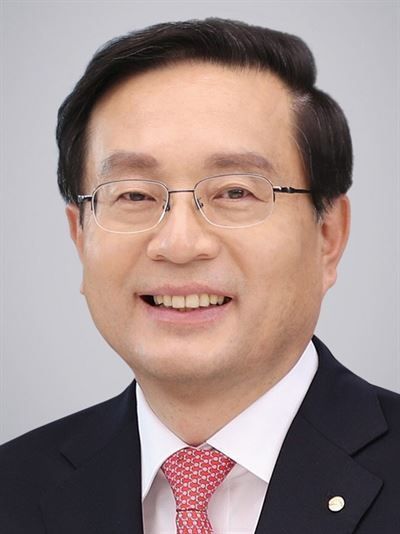
Woori Bank CEO Sohn Tae-seung
By Park Jae-hyuk
By Park Jae-hyuk
Woori Bank will not sell ultra-high-risk financial products, such as derivative-linked funds (DLF) or equity-linked funds (ELF), until it finishes overhauling its asset management system, the company said Wednesday.
This comes as one of a series of follow-up measures to avoid the recurrence of the mis-selling of high-risk products.
Apologizing again to its customers who suffered huge losses for its mis-selling of DLF options, the lender promised it would reform its asset management system to prioritize customer satisfaction over profit.
It also said it will make every effort to compensate customers as soon as possible.
“For the successful reform of our asset management system and our transformation into a customer-oriented corporate culture, our management and workers will try hard to be recognized for this by our customers,” the bank said.
Its reform plan includes a revision of employee evaluation criteria measured by key performance indicators (KPIs).
Woori said it will not use KPIs in evaluating employees in the fourth quarter and will come up with new evaluation criteria for sustainable growth.
The bank also is considering allowing a cooling-off period, during which customers can choose to cancel a purchase.
The cooling-off period for financial consumers was proposed during a National Assembly audit of the Financial Supervisory Service (FSS), Oct. 8, and FSS Governor Yoon Suk-heun responded that this would be a good idea.
Rep. Kim Byung-wook of the ruling Democratic Party of Korea welcomed the Woori decision and urged all commercial banks here to introduce a cooling-off period.