Rules hindering internet banking boom
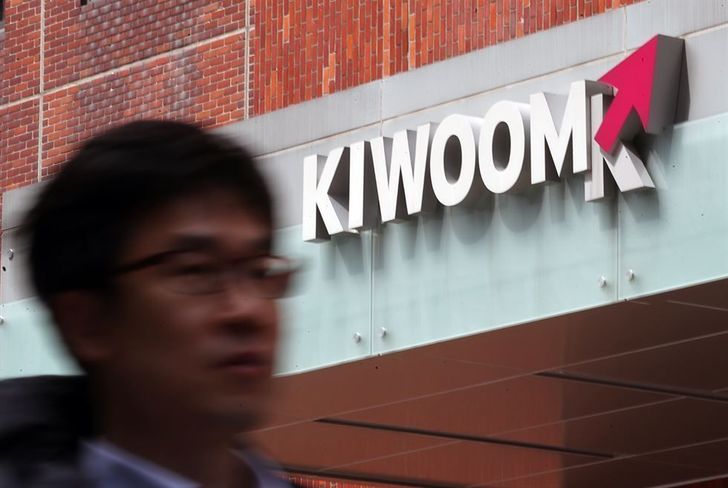
A man walks past Kiwoom Securities, whose proposal for an internet bank was rejected on May 26. Yonhap
By Park Hyong-ki
The financial sector was shocked by the regulator's May 26 announcement that it had rejected business proposals for an internet bank from both Kiwoom Securities and Viva Republica.
Even Financial Services Commission (FSC) Chairman Choi Jong-ku said he was surprised when he heard the decision made by an external committee that reviewed the proposals.
The reasons behind the rejection were Kiwoom Bank's proposal was not innovative enough, and Viva's Toss Bank had a governance problem.
“I honestly thought one of them would make it. I think the committee was very cautious about picking another internet bank that would end up looking like other banking applications in the market,” an industry source said.
All commercial and internet banks say in the beginning they will offer something different and unique. But they have all become similar or the same, the source added.
“So this begs the question: Do we really need another same app in this small market?” he asked.
“To create a game-changing, innovative service, one needs to think outside the box.”
However, the country's old rule that strictly separates finance and non-finance sectors has been a “roadblock” to thinking outside the box, industry sources and analysts say.
In the age of convergence where business borders are blurring and vanishing, another industry source agreed the rule has been detrimental.
“To achieve innovation or deliver something new, one has to create and generate synergy with businesses outside one's core interests or comfort zone,” the source said.
“But here, insurance, banks and brokerages have to operate within their own boundaries. They can't go beyond those under the rule.”
Even with a slight relaxation of the rule allowing tech conglomerates to own up to a 34 percent voting share in internet banks, K bank and Kakao Bank are having trouble raising capital from their non-financial groups because of the Antitrust Law.
The FSC recently suspended its review on whether to allow KT to increase its stake in K bank as some KT executives are facing prosecution over alleged collusion in a public project.
Lee Tae-kyu, an analyst at the Korea Economic Research Institute (KERI) said the rule hinders non-financial companies from setting up an internet bank that can offer niche services.
“I personally think a retailer has a chance to offer a unique banking service by using its own network and financial ties, but that's really not possible,” Lee said.
As an example of convergence, he pointed to Seven Bank in Japan run by Seven & I Holdings which operates 7-Eleven convenience stores. The internet bank is known for providing niche services via 7-Eleven's ATMs.
“Under the rule, some people here see Seven Bank not as a unique bank, but as a company that just offers an ATM service. It is unfortunate how our environment hinders us to think outside the box,” Lee said.