Trump diagnosis to strengthen dollar, but high market volatility not likely: experts
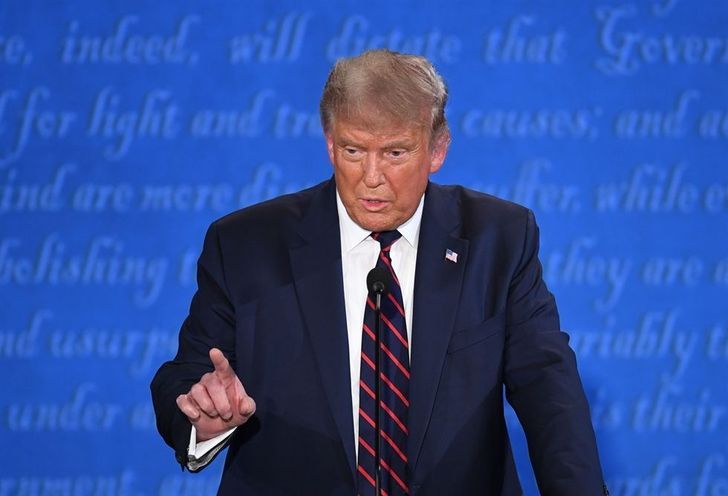
US President Donald Trump speaks during the first presidential debate at Case Western Reserve University and Cleveland Clinic in Cleveland, Ohio, Sept. 29. AFP-Yonhap
U.S. President Donald Trump's COVID-19 infection is expected to strengthen the dollar due to investors chasing safe assets, but financial markets are not likely to undergo high volatility, market experts here said Saturday.
Trump and first lady Melania tested positive for the coronavirus Friday, sending Wall Street's main stock indexes lower. The dollar index, a gauge of the greenback's value against a basket of six foreign currencies, rose 0.14 percent.
Analysts said Trump testing positive is expected to raise uncertainty in financial markets, prompting investors to snap up the dollar. But global markets are unlikely to post a sharp rise or decline only on this news in light of hopes for new U.S. stimulus measures, they added.
"The FX market is expected to be affected by Trump's infection, but there is little chance of the market seeing high volatility on the single issue," a currency analyst said.
The Bank of Korea is also closely monitoring global financial markets to gauge the impact of Trump's infection.
"As talks for a fresh U.S. stimulus package are gaining traction, it may offset investor sentiment for safe assets," an official at the central bank said.
"The financial market is unlikely to see herd behavior nor undergo sharp volatility, but we will closely monitor it," he added.
The country's financial markets closed for the third straight day Friday due to the Chuseok fall harvest holiday.
The main stock index rose 0.86 percent to end at 2,327.89 Tuesday, while the Korean currency closed at 1,169.5 won per dollar, up 4.1 won from the previous session's close.
Analysts said Trump's diagnosis is expected to have a limited impact on the South Korean stock market, but there is a need to be cautious about political and economic uncertainty that could be raised by his illness.
"Rather than Trump's infection itself, spillover factors could have an impact on the stock market. Concerns are growing that negotiations for an additional stimulus may be delayed due to his condition," Kiwoom Securities Co. analyst Suh Sang-young said.
Global investment bank Citi Bank said the Trump news was not likely to cause the forced selling of risky assets, given that uncertainty surrounding the U.S. presidential election has already been factored into the market to some degree. (Yonhap)