After-school child care workers go on strike over working conditions
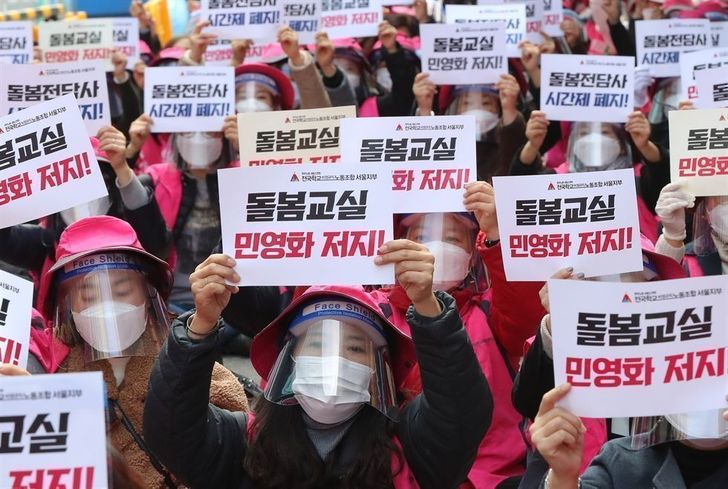
After-school child care workers at elementary schools protest near the office building of the ruling Democratic Party of Korea in Seoul, Friday. Yonhap
Hundreds of after-school child care workers at elementary schools were set to launch a one-day strike Friday, raising concerns about a void in child care for young students with working parents.
More than 6,000 after-school child care workers, about half their total number in the country, plan to take part in the strike led by a national rights advocacy group for non-regular school workers.
The workers are demanding that the education ministry withdraw a bill that transfers responsibility for the after-school program from schools to local governments. They say the local governments could then commission the private sector to provide the services, leading to poorer working conditions for them.
The workers are also demanding an elevation in their employment status from part time to full time, saying they have been working longer hours without additional pay amid increased demand for their services due to the coronavirus pandemic.
On Tuesday, the education ministry proposed holding talks through a consultative body made up of a labor union for after-school child care workers, parents' associations and education officials, but the National Council of Governors of Education refused to join without the participation of the health and gender equality ministries.
The education authorities have asked school officials to volunteer their services to continue the child care program during the strike and also plan to mobilize non-striking workers.
The authorities asked parents not to use the program Friday unless it is absolutely necessary.
On Thursday, the education ministry urged union members to cancel the strike in consideration of parents and children, and resolve their grievances through talks, especially at a time when many are already suffering due to the pandemic.
The advocacy group threatened Thursday to repeat the strike with more people for longer than a day unless their demands are properly addressed.
Around 200,000 elementary school students benefit from the program. Over 80 percent of them are either first- or second-grade students. (Yonhap)