Two men fined for hate speech against woman of mixed Korean heritage
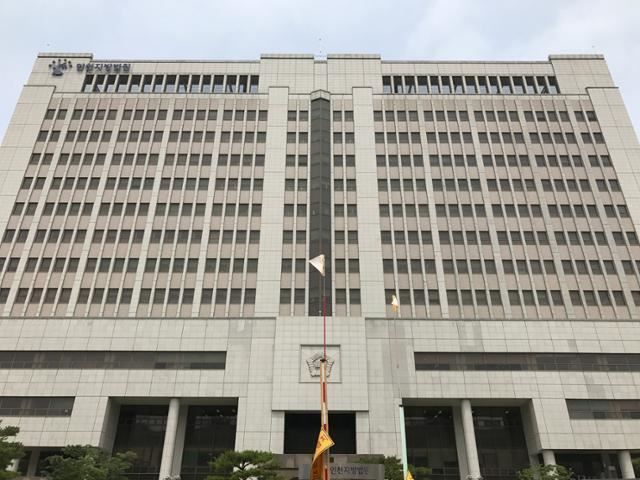
The Incheon District Court / Korea Times file
By Jung Da-min
Two men have been fined 1 million won ($860) each after being found guilty of insulting a woman of mixed Korean Bangladeshi heritage, by suggesting that she had COVID-19. This is the first time for a court to recognize that using hate speech against someone with the insinuation of a relationship between the coronavirus and an individual of migrant background constitutes committing an insult, which is punishable under Korean law.
The Incheon District Court issued a summary order Wednesday stating that the two men, aged 56 and 52, must each pay a 1 million won fine. A summary judgment is a court order issued without holding a full trial.
On Oct. 27 last year, the two men, who were drinking alcohol in front of a convenience store in Incheon at around 11 p.m., made the remarks to the 29-year-old woman, whose mother is Korean and father is from Bangladesh.
They shouted to her, “Hey, coronavirus!” After she protested, they taunted her with comments such as, “I guess people like you are all illegal migrants, aren't you,” and “Why do you bother to come to someone else's country and live such a tiring life?” while swearing at her.
The woman filed a complaint with the Incheon District Prosecutors' Office, with the support of 73 migration-related human rights groups, Dec. 10.
In a press conference held at the time of the complaint filing, she said, “I felt like my human rights were being violated as I was being discriminated against during such a sensitive time, due to the COVID-19 pandemic situation.” She also urged people to stop discriminating against people with different skin colors from theirs.
As the country has no laws specifically banning racism, xenophobia or hate speech, the men were charged with having “insulted” the woman. “This is the first case to recognize that hate speech related to the COVID-19 situation against someone of migrant background constitutes a form of insult and is punishable,” said the Yoon & Yang Pro Bono Foundation, which represented the woman.