Bahk Eun-ji has been with The Korea Times since 2012, building a career across multiple desks. She began at the Business Desk, where she conducted in-depth interviews with key figures in Korea's corporate world. Later, she moved to the Politics & City Desk, focusing on education policy and social affairs. She later served as team leader of the digital content team, leading curation efforts on the newspaper’s homepage and reshaping print stories for social media audiences to enhance digital reach. Now back on the Politics Desk, she covers the National Assembly and the Ministry of National Defense, with a renewed focus on political developments.
Health cooperation comes first for two Koreas
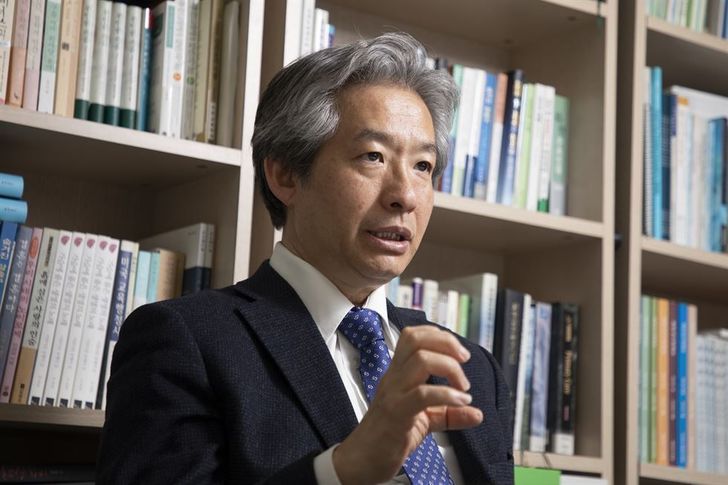
Psychiatry professor Jeon Woo-taek at Yonsei University, who is also the director of the Health and Unification Center, speaks during an interview with The Korea Times at his office in Seoul, April 1. / Korea Times Photo by Choi Won-suk
By Bahk Eun-ji
By Bahk Eun-ji
When South Korean President Moon Jae-in and North Korean leader Kim Jong-un jointly announced the Pyongyang Declaration last September, most people immediately thought about economic cooperation between the two Koreas. But Prof. Jeon Woo-taek thought differently.
Jeon, a professor of Yonsei University's psychiatry department and the director of the Health and Unification Center at the school, said he believes cooperation in the healthcare sector should come first, and then economic and cultural cooperation needs to follow for unification.
“Cooperation and collaboration means people in the South and the North contacting and exchanging many things. It means the two Koreas will possibly face unexpected consequences especially in the healthcare area,” Jeon said in an interview with The Korea Times at his office in Seoul, April 1.
He said contagious diseases prevalent in the two Koreas are utterly different from each other due to the different regional and living conditions.
“For example, a South Korean who visited Middle East countries can transmit Middle East Respiratory Syndrome (MERS) coronavirus to the North, and likewise, North Koreans can transmit other disease to the South, if the day comes when people in the two Koreas visit each other's countries freely,” Jeon said.
“For example, North and South Koreas are very close to each other, so insects and mosquitoes can always spread viruses across the border. From an epidemiological perspective, the two Koreas are so close that an outbreak in one country can affect the other.”
North Korea has been mainly struggling with four diseases _ tuberculosis, malaria, hepatitis and parasites. The North's nutrition and hygiene problems were highlighted in the South when parasites were found in North Korean soldier Oh Chong-song who was critically injured while defecting to the South in 2017.
“Unlike economic cooperation, the healthcare area can change people's minds and attitude toward unification because it is directly connected to their health and life.”
Well aware of this point, the two leaders agreed, in their joint declaration, to strengthen cooperation in the health and medical sector such as emergency measures to prevent the influx and spread of contagious diseases. In November, ranking health officials of the two countries also agreed on joint measures to combat infectious disease, including tuberculosis and malaria, during a meeting at the joint liaison office in Gaeseong.
However, concrete plans for working level and practical actions have yet to come, Jeon said.
What the South can do
Jeon said South Koreans have to change their traditional thought of unification ― the South's unconditional support for the North such as building new hospitals and providing medicines.
“There are a number of fields in biotechnology that the two Koreas can exchange their ability equally. For example, telemedicine, in which the North is highly interested, is a new business model for both, combined with the two Koreas' advanced computer skills,” Jeon said.
The North is highly interested in telemedicine mainly due to its inferior road conditions, the professor added.
South and North Koreas can also run a project for an integrated healthcare database that can be advanced into academic research, Jeon said.
“South and North Koreans have same DNA, but their medical information would be greatly different because of their different lifestyle and circumstances. It has a significant meaning from the medical point of view, so if we can work together, the two Koreas will be able to get huge database for the information.”
Jeon also expects cooperation in the pharmaceutical area. Unlike South Korea where modern medical science prevails, North Korea still relies more on traditional Korean medicine, which it calls “Goryeo Medicine.”
“I'm not saying we should adopt the North's traditional medicine abruptly, but saying that we can develop new drugs based on its accumulated knowledge about domestic crude drugs. This will lead to major steps forward in medicine, I believe,” Jeon said.
Health and unification center's role
Jeon has been leading the Health and Unification Center since April 2014 when it was established. The center is the nation's first organization to study North and South Korea's health issues under the Yonsei University Health System which integrates Severance Hospitals, graduate schools, research centers, and colleges of medicine, nursing and dentistry.
The center launched an education course about health and unification as an elective course, and for those who are especially interested in this area, the center provides full-day training programs to treat North Korean defectors at the National Medical Center and Seoul Medical Center.
“The goal of the education program is nurturing medical workers for unification, and I believe it is one thing academia has to do,” Jeon said.
He began to have an interest in North Korea when he met a North Korean defector in 1993.
“He was the first North Korean I met. Later I found out our fathers had fought in the Korean War as opponents,” Jeon said. “As a social psychiatry specialist, meeting him was a sort of turning point in my life that gave me a momentum to study about North Korea, because I found out we are at same age and both shared tragic, painful history.”
Jeon said the main achievement in the center is that it gives a number of opportunities for participants to be more closely engaged in unification and North Korea issues.
“Just like my North Korean friend gave me a chance to be interested in the North 25 years ago, I hope this center can serve as momentum for others to prepare for a new unified Korea.”