Bahk Eun-ji has been with The Korea Times since 2012, building a career across multiple desks. She began at the Business Desk, where she conducted in-depth interviews with key figures in Korea's corporate world. Later, she moved to the Politics & City Desk, focusing on education policy and social affairs. She later served as team leader of the digital content team, leading curation efforts on the newspaper’s homepage and reshaping print stories for social media audiences to enhance digital reach. Now back on the Politics Desk, she covers the National Assembly and the Ministry of National Defense, with a renewed focus on political developments.
Koreans smoke less, drink more than 10 years ago: data
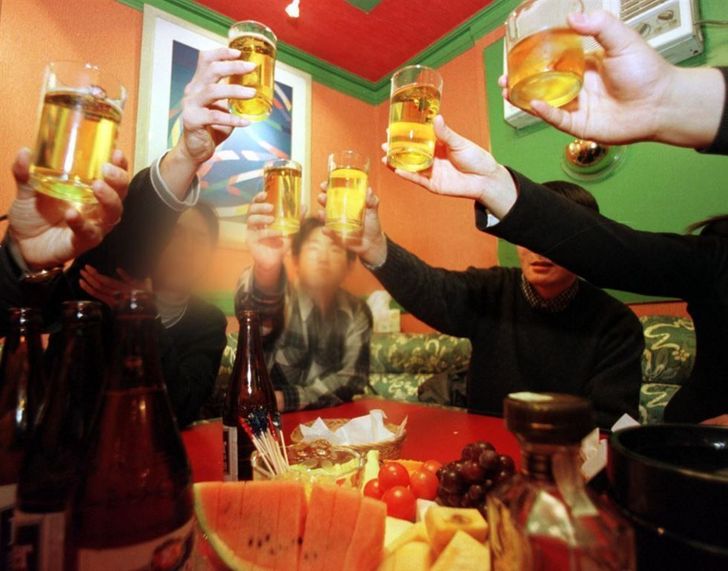
Koreans smoke less but drink more than 10 years before, according to data by the Korea Centers for Disease Control and Prevention. /Korea Times file
By Bahk Eun-ji
By Bahk Eun-ji
Koreans smoke less and drink more than 10 years ago, data from the Korea Centers for Disease Control and Prevention (KCDC) showed Thursday.
They are also gaining weight despite growing attempts to stay healthy.
According to the 2018 survey on about 228,000 people across the country, 21.7 percent said they smoked, down from 26.1 percent in 2008. The rate for men stood at 40.6 percent in 2018, also down from 2008's 49.2 percent.
Compared to the smoking rate, 60.9 percent said they drank at least once a month during the last one year, up from 54.2 percent 10 years ago. The rate of heavy drinkers ― men drinking at least five cans of beer in a sitting, at least twice a week, and women, three cans ― also rose to 19.2 percent from 18.5 percent.
More people have also become obese than 10 years ago, as 31.8 percent were classified as such, up from 21.6 percent. The obesity rate grew despite increasing attempts to control weight, as 58.9 percent of people said in 2018 that they tried to lose or maintain their weight over the past one year, up from 39 percent in 2008.
About 43 percent said they walked for 30 minutes or more at least five times a week, down from 2008's 50.6 percent.
People's average sleeping hours changed little over the past 10 years, measuring 6.7 hours in 2018 slightly down from 6.9 in 2008.