Bahk Eun-ji has been with The Korea Times since 2012, building a career across multiple desks. She began at the Business Desk, where she conducted in-depth interviews with key figures in Korea's corporate world. Later, she moved to the Politics & City Desk, focusing on education policy and social affairs. She later served as team leader of the digital content team, leading curation efforts on the newspaper’s homepage and reshaping print stories for social media audiences to enhance digital reach. Now back on the Politics Desk, she covers the National Assembly and the Ministry of National Defense, with a renewed focus on political developments.
25% of children are obese: data
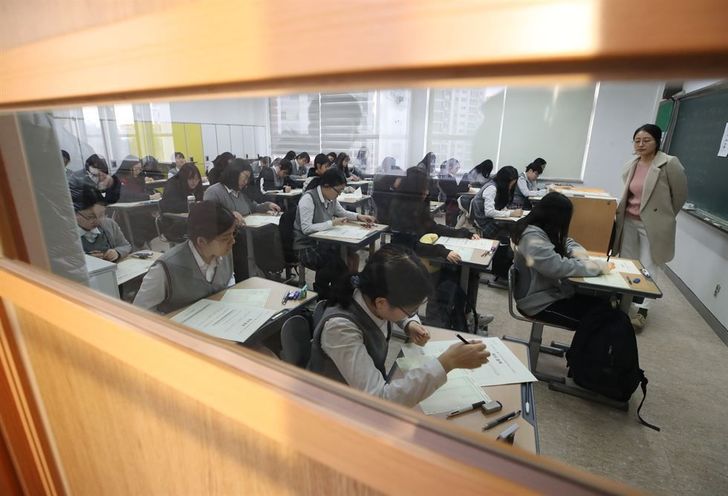
The obesity rate of young students in Korea grew to 25 percent last year, up from 21.2 percent in 2014, according to the Ministry of Education, Thursday. /Yonhap
By Bahk Eun-ji
By Bahk Eun-ji
Children are getting obese, eating more fast food and fewer vegetables and skipping breakfast while doing less exercise, data from the Ministry of Education showed, Wednesday.
According to the 2018 statistics on 108,000 students at 1,023 elementary, middle and high schools nationwide, 25 percent were in the obese group (10.6 percent overweight and 14.4 percent obese), up from 21.2 percent in 2014.
Their eating and exercise habits showed the reasons for the increase in childhood obesity, as they often skip breakfast, avoid vegetables and enjoy fast food and instant noodles.
Some 80 percent of high school students, 77.6 percent of middle school students and 65.9 percent of elementary school students eat fast food at least once a week, while the ratio of students eating instant noodles at least once a week was higher.
Compared to this, only 22.7 percent of high schoolers, 24.9 percent of students in middle school and 28.8 percent of elementary schoolchildren eat vegetables on a daily basis.
An increasing number of young students skip breakfast, with 19.7 percent of high school students, 16.2 percent of middle schoolers and 6.06 percent of elementary school students.
Despite the unhealthy eating habits, only 23.6 percent of high schoolers do strenuous exercise at least three times a week ― 12.6 percent of female students and 33.6 percent of males.
Many students also didn't get enough sleep, with 43.4 percent of high schoolers, 13.5 percent of middle schoolers and 3.06 percent of elementary schoolers sleeping less than six hours per night.
Meanwhile, their average height has changed little over the past five years.
The students' eyesight was bad too: 75.4 percent of high school students, 65.6 percent of middle school students and 48 percent of elementary schoolchildren needed glasses.