'Impossible to abolish national pension'
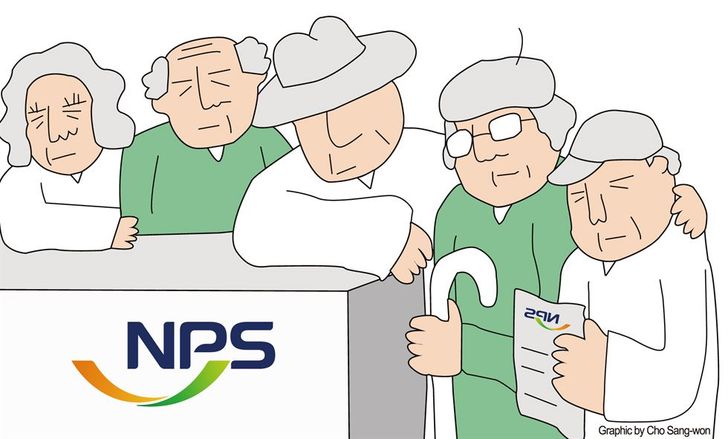
By Kim Hyun-bin
People have been voicing outrage over the National Pension Service's recent proposal to increase premiums and extend the payment age to keep the national pension alive and running.
There have been endless petitions on Cheong Wa Dae's website calling for the abolishment of the national pension system, as subscribers are increasingly concerned they won't be able to receive pensions after retirement.
According to the relevant law, if the majority of the public is in favor of the termination and the National Assembly endorses it, the fund could be abolished.
However, many experts say it would be impossible to end the program as the liquidation would cost more than what's needed to maintain the fund.
In addition, the national pension fund is invested heavily in both local and foreign financial markets.
The NPS has invested in numerous key Korean conglomerates, holding a 9.67 percent of stake in Samsung Electronics, 8.44 percent in Hyundai Motors and 9.2 percent in SK among others.
Experts say if the investments are suddenly taken out, it could cause the stock market to crash.
As of May, 20.5 percent of the national pension fund is invested in local stocks, 18 percent in foreign stocks, 46.5 percent in local bonds, 3.8 percent in foreign bonds, 10.6 percent in alternative investments and 0.2 percent in other fields.
Only 0.4 percent of the fund is cashable assets, according to the NPS Investment Management headquarters.
People who have subscribed to the pension for at least 10 years are eligible to receive a pension starting at age 65. As of May, there are over 4.47 million people who are eligible to receive the pension.
Under the current law, it is mandatory for the government to pay out pensions for anyone who has subscribed for over 10 years. If the pension is depleted, the government is obligated to pay its fair share from taxes.
As of May, there was 634 trillion won ($557 billion) in the national pension fund _ equivalent to 36 percent of the GDP. However, the fund is hardly enough for the current eligible subscribers.
The NPS estimates 1,242 trillion won is needed to reimburse all current subscribers, almost double the current fund.
When the NPS was first implemented in 1988, there was only 530 billion won in the fund but that number exceeded 100 trillion won by 2003 and reached 634 trillion won as of this May.
An advisory panel of the public pension fund said the reserve was expected to peak in 2041 at 1,778 trillion won, but it is predicted to decline starting the following year and be depleted by 2057.
The estimate is three years earlier than the government's previous projection in 2013, which forecast that the fund would be depleted by 2060.
“Some are calling for the abolishment of the NPS, claiming they will take care of their own livelihood after retirement,” NPS Chairman Kim Sung-joo said. “However, this is a dangerous idea both for the individual and for society.”
According to Statistics Korea, 62.1 percent of the population are preparing for their retirement through the NPS and other public pension plans, and only 9.8 percent are seeking private pensions.
“If people prepare for their own retirement without the NPS, they are bound to be careless, and the government will have to take responsibility for their negligence later,” Kim warned.
On Aug. 17, the pension operator suggested two premium plans to sustain the system.
The first option maintains the pension income replacement rate at 45 percent, but raises the premium to 11 percent from the 9 percent now, starting next year. The premium is expected to increase again in 2034 to 12.3 percent, and after that the NPS would adjust the premium every five years.
The second option aims to lower the replacement rate by 0.5 percentage points annually until it reaches to 40 percent in 2028, while gradually increasing the premium to 13.5 over the next decade. The eligible age to receive the pension _ set at 65 until 2033 _ would be adjusted to 67 by 2043.
The welfare ministry plans to gather public opinion and submit a revised proposal to the National Assembly in October.