Citizenship issue puts immigrant wives in tight spot
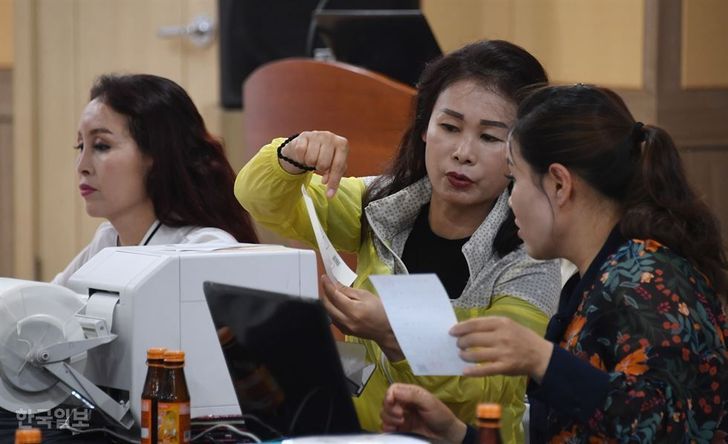
Marriage immigrant women learn how to vote at the regional elections in Paju, Gyeonggi Province, on June 7, 2018. Korea Times photo by Ryu Hyo-jin
By Lee Suh-yoon
Marhabo, 35, now a single mother, is a marriage immigrant from Uzbekistan. She has lived in Korea for more than 10 years, and is raising two children, aged nine and 10, on her own. But she has not been granted Korean citizenship.
“Whenever I go to get public or medical services they tell me I need a Korean citizenship,” she said. “Coupled with the language barrier, it gets really difficult.”
Pham Thi Nga, 30, a marriage immigrant from Vietnam, is struggling with a similar problem. She came to study in Korea seven years ago, fell in love, and married a Korean man in 2011. Five years later, she still does not have Korean citizenship or a permanent visa.
In November 2016, she applied for citizenship and had to wait more than 18 months for a response from immigration authorities.
“When they finally contacted me, they told me they had been too busy looking at my case,” Pham told The Korea Times, Thursday. “They told me outright that my case had been sorted into a lower-priority file subject to delay because I did not have children.”
The topic of children came up again when authorities inspected her house.
“After checking that I lived with my husband, they kept prodding me on why I don't have children,” she said. “My husband and I were very offended but could not say anything in case it might negatively affect my application.”
She is still waiting to hear back from the department. But based on her experience as a counselor at a marriage immigrants human rights center in Daegu, she is not confident.
“I've seen many cases where marriage immigrants, even those fluent in Korean, were not able to get Korean citizenship because they chose not have children or even if they did, had divorced their husbands.”
Activists and scholars say the immigration laws encroach on the basic rights of marriage immigrants, of whom more than 80 percent are women.
“The current legal framework only guarantees a stable stay in Korea to female immigrants who fill in the role of a wife, mother, as well as caretaker for their parents-in-law,” Kim Eun-jung, a professor at Hanyang Women's University said at a policy recommendation forum hosted by the National Human Rights Commission (NHRC) on Thursday.
“From a gender and human rights perspective, such an approach is problematic and requires change.”
The application process for citizenship – as well as visa extensions – often requires the consent of Korean partners. This puts many marriage immigrants at the mercy of their husbands, many of whom choose to abuse this power.
“I found out in my interviews with marriage immigrants that many husbands do not cooperate, accusing their wives of planning to leave them after they gain permanent citizenship,” Kim said.
“And sometimes asking for help with the citizenship application even results in a violent response from husbands.”