Schizophrenic expat seeks 'Way Out' in nonfiction book
By Robert Neff
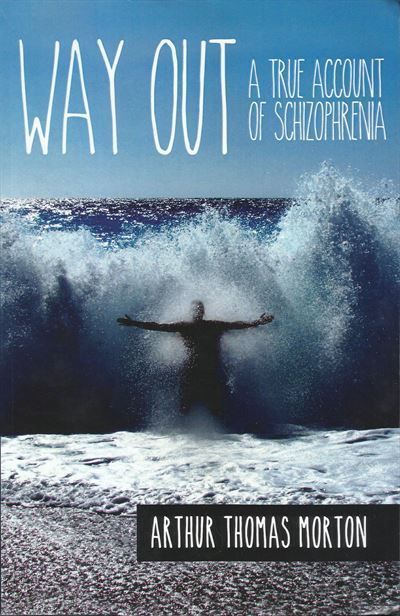
Eugene Uttley (not his real name) came to Korea in 2001 to teach. His story starts typically: a graduate student who needed some time off to discover himself and thought a one-year stint in Korea would be good for him. A shady recruiter, a less-than-ideal job in Ulsan, falling in love with a fellow expat and developing an appreciation for Korean culture (especially martial arts) are all part of his story _ all common themes in books by expat teachers _ but not the part that matters in “Way Out: A True Account of Schizophrenia” from Pen-L Publishing.
After his first year, he lost his girlfriend and his savings around the same time. And then he lost touch with reality.
It began with paranoia. In late 2006 he began to feel under constant scrutiny. Not the curious glances of the Korean population but by the government or military or something even more powerful. Robotic birds watched him from the roof and voices in his head spoke to him. “We” was a friendly group of do-gooders that wanted him to join them to fight pollution and other evils. “They” were the dark voices _ possibly associated with North Korea _ that wanted to hurt him.
In early 2007, he swam out into the ocean in an attempt to reach the voices. He lost his passport and nearly his life. He escaped hospitalization and then left his job, making his way to Seoul where he lived on the streets _ sometimes in Itaewon but usually in Pagoda Park, where he shared soju and companionship with other lost souls. The Koreans there fondly called him Cheonsa (angel). When he wasn’t drinking, he was picking up litter in the park _ part of his mission to fight pollution.
It was a volatile time. Demonstrations against U.S. beef were increasing and distrust of the United States and Americans was growing. Uttley was convinced some of his Korean companions were representatives of North Korea and were there to punish him for not only being American but also because of his anti-North Korean rapping (Uttley entertained himself and passersby with his impromptu raps).
Several times Uttley sought help. He went to a Korean police station and told them he had no money or passport, but they merely told him to contact his consulate. He went to the consulate but lacked money to obtain a temporary passport. According to Uttley, it was suggested he go to a church or temple where he might find some financial help. He went to immigration and confessed he was in the country illegally but they merely directed him back to the consulate. Finally, after telling the consulate staff he “was desperate and hungry, in the country illegally, and had been…in a fugue state, for weeks,” they helped him get home.
Here the Korean part of Uttley’s story ends but it isn’t a happy ending. In the United States his disease got worse before it got better, his schizophrenia developing into a kaleidoscope of spirits, extraterrestrials, celebrities and spies. His story, told by Arthur Morton, highlights the inadequacy of society to properly care for people with mental health issues _ not just in Korea but the United States as well.
Morton told The Korea Times he felt compelled to write this book because it was “a part of the healing process” for Uttley and allowed him to reach out to his fellow sufferers “and let them know they were not alone.”
It is a sobering thought, especially when one considers approximately one percent of the population suffers from schizophrenia. Read the book _ you might recognize someone you know.