Min Seong-jae (smin@pace.edu) is a professor of communication and media studies at Pace University in New York. He was a 2023-24 Fulbright U.S. Scholar to Korea.
Random knife attacks
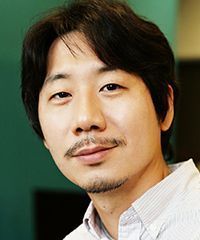
By Min Seong-jae
A series of random stabbings and possible copycat crimes in recent weeks sparked fear and mass panic in Korea. In two separate incidents, an assailant with a knife killed and wounded multiple people near major subway stations in and around Seoul. In Daejeon, a man entered a high school and stabbed a teacher. And dozens of people have been apprehended for making online threats for similar crimes.
These are the so-called “don't ask why” crimes, aimed at random victims whom the assailants have no connection with. The attackers' motivations are unclear as well. These types of crimes are rapidly on the rise in Korea, long considered to be a safe country.
We don't know exactly why such crimes are rising in number. And the details and circumstances of one case will be different from another. But one can find a pattern in these crimes. That is, the assailants are almost always young males who are in the relatively lower rungs of society. They are socially isolated, in poor economic condition and possibly in a state of anger and frustration towards society. They may also exhibit signs of toxic masculinity, or destructive male dominance and aggression. A similar trend was observed in Japan in the 1990s and 2000s when the country saw a high number of random stabbing attacks on streets. Japanese researchers found that social isolation and economic frustration were the main motivators behind the attacks. And in the United States, some profiles of mass shooters are eerily similar to those of the knife attackers in Korea.
What this means is that the possible cause of these crimes is as much individual as social. Sure, individual mental problems may have been the direct cause of the crime, as the police often claim. But the social conditions ― the disintegration of family and community, and little safety net and welfare for those who lag behind in society ― must have contributed to the rising crimes.
The United States has approached the issue of mass shootings as that of individual outlier behaviors, not as a social problem, due to the lobbying of gun rights groups and deep-rooted culture cherishing the individual right to own guns. The consequence is an ever-rising number of innocent deaths by mass shooters. Korea is fortunate to be virtually gun-free (imagine the disastrous scenes if guns were allowed in Korea). But as long as these crimes are considered to be isolated incidents committed by the mentally ill, more innocent lives will be lost.
Separately, media coverage of these crimes requires caution to prevent future copycat crimes. Such things as repeated showing of panicked people and delivery of the statements by the attackers may cause trauma to the viewers and provide potential criminals with a new motivation. The U.S. media know this well, as they often got criticized for irresponsibly delivering the details of the mass shooters' manifestos, their motivations and life trajectory, the types of weapons used, how the attacks were executed, etc., creating a sense of fear and the possibility of imitation. This type of coverage is sensational and attention-seeking and shifts our attention away from structural and social focus to that of individual misdemeanors.
It is important to strictly punish criminals according to the rule of law. But strong punishment alone will not prevent these crimes from occurring in the future. Those who commit this type of crime are isolated and uncared for in society and won't be deterred by the possibility of harsh punishment because they feel that they do not have much to lose. A society of warmth and care for others is needed.
Min Seong-jae is a professor of communication and media studies at Pace University, New York City. He is a 2023-24 Fulbright U.S. Scholar to Korea.