Pearl Harbor attack brings war to Korea
By Robert Neff
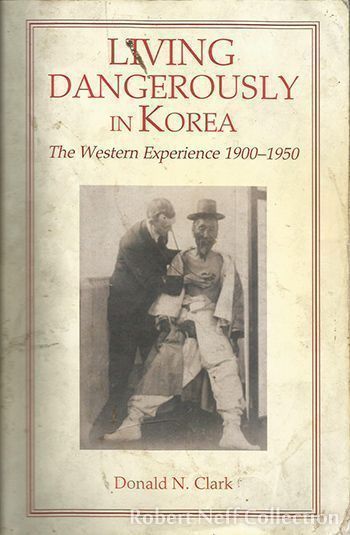
For more information about life in Korea before and after Pearl Harbor, I strongly recommend reading Donald N. Clark's book, “Living Dangerously in Korea.”
Mary Linley Taylor, Seoul History Museum exhibit February 2018
In Korea, December 7, 1941, was a beautiful but unremarkable Sunday morning.
In her diary, Mary Taylor wrote: “Up before sunrise. Down the hill to church. The sun came round Nam San (South Mountain), ruby-red, lighting up the frozen snowfall of last night.”
It was a normal day. She and her husband Albert (an American businessman and part-time correspondent) had breakfast at the British consulate with Gerald Phipps, the British consul general, and his wife Aline. Leaving their husbands behind, the two women then went for their customary country walk near the West Gate district, accompanied by their dogs.
For the most part, we don't know what the women chatted about as they tramped over the hills and through the snow. There was little to gossip about. The rumors of war had decimated the Western population in Seoul ― especially the Americans. In the previous year, nearly three-quarters of the American community was gone.
The largest of the Western gold mining concessions ― the American-owned Oriental Consolidated Mining Company ― was sold in late 1939 and most of the Western miners and their families had returned to the United States or to the mines in the Philippines.
The only Americans remaining in Seoul ― mainly missionaries and a handful of businessmen ― were viewed with suspicion and treated with barely concealed contempt by the Japanese. Seemingly, the British were especially despised by the Japanese and treated worse.
As the two women parted from their walk, Aline suddenly turned to Mary and said: “If anything happens, Mary, the diplomatic service will be evacuated at once. How I shall hate leaving you.”
Aline's intuition may have been correct but not about the evacuation.
Early in the morning on December 8, the recently arrived American consul general, Harold Barlow Quarton, was awakened by a telephone call from a missionary wanting to verify war had been declared between Japan and the United States. A similar call was received at the British consulate. Apparently, the Underwood family had heard about the attack on Pearl Harbor while listening to their radio.
Verification soon arrived.
Quarton later recalled: “I got the report on my shortwave radio, and at 9 a.m. we were handed a 'special notice' in Japanese which stated that 'the imperial army and navy fell into a state of war with Great Britain and the U.S.A.”
Phipps was notified by the Japanese police that he was to appear at the Foreign Affairs Bureau at 2:30 p.m. He was also warned that consulate staff were not to attempt to leave the compound or use the telegraph. Several Japanese gendarmes were then posted to guard the gates of the compound.
Throughout the morning, the consulates burned and destroyed their confidential reports and prepared for the inevitable search of the compounds. The searches began in the late afternoon when plainclothes Japanese policemen descended on the British consulate and began a thorough search of the compound. Nothing was overlooked ― even tubes of toothpaste were squeezed out to ensure their contents. Radios, maps, documents and firearms were all confiscated. The consulate staff were then confined to the compound.
Japanese soldiers march through the streets of Seoul, circa 1910-1920s. Robert Neff Collection
Aline's belief that she and the other diplomats would be immediately evacuated once war began was sadly proven wrong. In her diary she wrote: “We are in an impenetrable fog where we hear no one nor make ourselves heard.”
At the same time, the American consulate was searched by 350 Japanese soldiers who “swarmed over the place, scaling the walls, running everywhere, inspecting everything.” Quarton and his two assistants were then confined to their quarters.
Throughout Seoul, male Westerners, with the noted exception of the Germans, were rounded up, interrogated and then confined in makeshift holding facilities. Many were not allowed to return to their homes and families for several weeks while others less fortunate were confined for months. Their interrogations were often accompanied by torture.
The most popular torture was the “water cure” or, as the Japanese called it, a “drink of water.”
Members of the Western and Japanese communities in Seoul, circa May 1936. Robert Neff Collection
According to Quarton, a naked prisoner, bound with his hands and knees drawn to his chest, had a rubber hose forced into his mouth. Great quantities of water were then poured down the tube, causing it to “spurt from the prisoner's eyes, ears and nose.” When the prisoner lapsed into unconsciousness, he was beaten with rubber truncheons and hoses to the head, feet, shoulders and back. Often the torture would be repeated five or six times.
The attack on Pearl Harbor had brought the war to Korea.
Note: This is the 200th article of this series and I would like to thank the staff of The Korea Times ― especially Oh Young-jin (Digital Managing Editor) and Lee Jong-eun (web designer) ― for providing me with this platform. I would also like to thank Diane Nars, who has provided so much invaluable assistance and allowed me to use her images. I would also like to thank you ― the readers ― for your comments and emails (both positive and negative) and hope you have found at least a few of the articles entertaining or interesting.