My life at a Korean law firm (part 15)
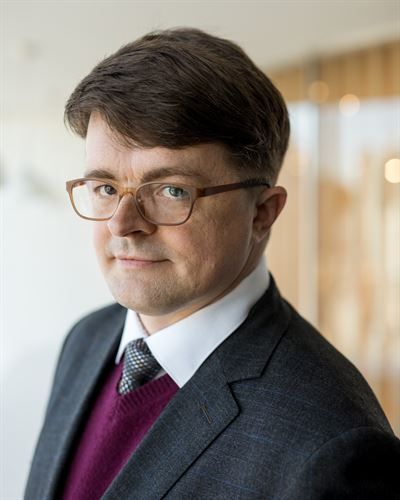
By Jacco Zwetsloot
With the North and South Korea summit to take place in just a week, it makes me think back to my observation of inter-Korean relations since I arrived.
North Korea's Eternal President Kim Il Sung had died in 1994, and then-South Korean President Kim Young-sam, instead of sending condolences, allowed his Prime Minister to label him a war criminal and blame him for starting the Korean War.
Yet late that same year, the Agreed Framework with the United States was signed. It was designed to stop Pyongyang's nuclear program in its infancy, and in exchange a new international consortium called KEDO would build light water reactors to supply power to North Korea in a way that would not produce fissile material that could be turned into weapons.
During my first year in Korea, I saw no hope or expectation of a summit. In fact, things were quite tense, and direct communication between the two Koreas was cut off within six months of my arrival (no causal link there), despite South Korea's involvement in KEDO. Nevertheless, I did not have any feeling of danger coming to live here at that time. That might have been youthful feelings of immortality or just plain ignorance.
That first year offered several surprising inter-Korean events, which I followed closely in The Korea Times. In September 1996, a North Korean submarine was stranded off the coast of Gangwon Province, leading to a seven-week manhunt to capture or kill the crew of 24 soldiers. (Pyongyang first denied responsibility or ownership of the submarine, but ultimately expressed “deep regret” in a statement at the end of the year.)
In October, a South Korean consular official was murdered by poisoning in Vladivostok, possibly in retaliation for the submariners' deaths. That same month, the ROK government announced its plans to resume the spring Team Spirit join exercises with the U.S. military, after a three-year moratorium. In November, the North shut its liaison office in the Panmunjeom truce village.
There was great concern and excitement in February 1997, when Hwang Jang-yop, head lecturer in philosophy at Kim Il Sung University and according to some the architect of North Korea's state ideology, defected at the South Korean embassy in Beijing.
I remember a lot of anger from Pyongyang at the time, first claiming Hwang had been kidnapped, and then eventually dismissing him as human trash when it became clear he had switched sides voluntarily.
Shortly afterwards, an earlier North Korean defector, Yi Han-yong, was shot and killed outside his home in Bundang, possibly in retaliation for a book he had written exposing the secrets of the North Korean leadership.
So things were not looking good. But in 1998, Hyundai founder Jeong Ju-young, suddenly led a convoy of trucks carrying 500 live cows across the demilitarized zone into North Korea, as a peace offering and a kind of food aid. This was his first trip across the border since the Korean War, and the North allowed him to visit his home town.
It was the first sign of possible rapprochement that I saw, but I also remember media reports of Pyongyang complaining that some of the cows were unhealthy and had died due to pieces of plastic in their stomachs, and blaming the Seoul government for trying to sabotage the event. Jeong made a second trip a few months later with 500 more cows.
It was hard for me, a novice at inter-Korean affairs, to make sense of all this. Sometimes things would appear to be improving, and then there would be a dramatic downturn and more hostilities. In preparing this blog post I looked back at the timeline of inter-Korean relations on the website of the Wilson Center, and reminded myself of all the things I had forgotten or that had slipped my mind (the first battle of Yeonpyeong in June 1999, North Korea nullifying the Northern Limit Line in September that same year, and so on).
With all these seemingly contradictory things going on, I guess at some point I became inured, and adopted a distance in order to stay sane. Also, like many others, I began to see things operating in a kind of cycle of crisis followed by abatement. Retired US Army officer Steve Tharp, whom I had the good fortune to meet many years later, had personal experience of this cycle and wrote a good column on it for this paper in May 2017 that is still available online.
In 2000 my wife and I were living in Australia, so we watched the first North-South summit from afar. I remember seeing the footage of Kim Dae-jung being greeted at Pyongyang Airport by Kim Jong Il and being overcome with emotion. This is it, I thought. Finally a breakthrough. Like many in South Korea, I hoped for real inter-Korean reconciliation. I cheered when DJ won the Nobel Peace Prize that year. But disappointment eventually and seemingly inevitably followed. The cycle had started again.
By the time of the October 2007 summit between then-President Roh Moo-hyun and Kim Jong-il, I was back in Seoul, but did not have much hope for anything. It all seemed too rushed and desperate, with South Korea eager to get a deal of some sort before the next presidential election.
In 2013 conservative politicians would allege that Roh had offered to do away altogether with the Northern Limit Line in the Yellow Sea, and that current President Moon Jae-in, who at the time was Roh's chief of staff, had deleted the relevant portions of summit transcripts. These charges were investigated by the Public Prosecutor, but I am still not sure what the upshot was.
Now here we are, 10-and-a-half years later, and a week from the third inter-Korean summit, but I feel somewhat cynical and jaded. This time I hope that President Moon will be savvy and not negotiate from a position of naivete. He does seem to have learned from the mistakes of his predecessors, but who knows?
Also, I am telling myself to remain stoic and keep calm. The quality of any deal is not in the paper that is signed or the joint statement that is made; it is in the follow-up steps and procedures. Therefore, it is likely that we won't know the full value or outcomes of this summit for months or even years after the meeting itself.
But I would encourage all curious listeners to check out the weekly NK News podcast that I host ― available on YouTube, SoundCloud, iTunes, and Stitcher ― in which I interview experts and journalists about all matters relating to North Korea.