Park's national security team
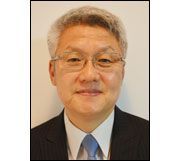
By Yoon Suk-joon
South Korea's first woman President has finally announced her national security team, and virtually all are four-star generals and richly experienced warriors in South Korea’s national defense. Apparently then, they are well qualified to advise Park on national security and to deal with the North Korean issue.
In my view, however, these nominations are very unfortunate, and I anticipate serious shortcomings for the future of South Korean national security. First, it is crucial for Park to make a clear distinction between national security and national defense. Instead of the zero-sum approach of the battlefield, we need to identify win-win processes so specific foreign policy goals can be achieved through all-embracing political intercourse using the most appropriate political means.
Second, for the time being there is a wind of change blowing, with the prospect of moving forward after six decades of confrontation and friction between the two Koreas. Park should therefore move beyond the obvious precedents by forming a more comprehensive and diverse national security team capable of networking vertically and horizontally within governmental structures: it must not hinder her new foreign policy approach toward nations other than the United States, especially China.
Third, this new team is completely dominated by the army, and the resulting factionalism has absorbed much energy. All other viewpoints have been lost: non-army generals, non-military scholars, other experts and diplomatic veterans, together representing a wealth of experience on national security matters.
Rather than formulating a grand strategy for long-term defense reform and ultimate unification, Park will struggle to get beyond simply dealing with North Korea’s ongoing military provocations. On March 13, North Korea criticized Park in the most derogatory terms, calling her a warmonger unable to take command of the situation on the Korean Peninsula. The erstwhile four-star generals have yet to react, but their options are very limited.
Fourth, with the new team in place, developing a comprehensive strategy will be difficult. With their extensive power base in the military, and their narrow focus upon military-first national security issues, they have ensured that think tanks and interest groups recommending alternative policies will have much less clout than before. A network of military veterans remain influential just below the top-level security and defense leadership, and their inward-looking form of extreme patriotism will likely displace more constructive options.
Lastly, Park’s army-dominated national security team may not understand the concerns of the wider military, weary from five years of the “defense reform 2020” program to reduce costs by establishing specifically Korean versions of “joint” and “combined” forces, when it seems probable that any future provocation from the North will come from the seas or the air, rather than the land.
In practice, former President Lee Myung-bak’s promise of a “strong military” did not deliver what the South Korean military wanted. The current team of close-minded unilateral defense reformists will likely cause widespread dissension, much as Lee’s defense reform program did by creating inter-service units comprising of the army, navy and air force.
U.S. commentators have welcomed South Korea’s new national security team as “a perfect combination,” meaning they are pro-U.S. conservatives unlikely to pursue any policies disruptive to Western interests. Indeed, Kim Byung-kwan actually received a personal letter of endorsement from a former U.S. four-star general; he was nominated for defense minister, but withdrew after a tough confirmation hearing focused on his well-paid consultancy work for an arms-broker and allegations of corruption.
To well-informed domestic observers, however, it is deeply disappointing that the mainstream of national security policy and strategy has been captured by an unrepresentative army-dominated mindset. After losing all the experts of the previous administration, there is now nobody capable of any flexibility, especially toward North Korea.
Indeed, Kim Jang-soo, who is proud of maintaining an unyielding attitude toward North Korea, famously remained upright, refusing to bow, when he shook hands with the late Kim Jong-il during the 2007 inter-Korean summit. He is now Park’s closest advisor, while her administration is supposedly seeking rapprochement with the North in order to implement her policy, from her election manifesto in 2012, of a “trust-building process on the Korean Peninsula.”
It is difficult to imagine anyone less likely to produce a comprehensive and constructive national security strategy than this former four-star army general and his colleagues.
The writer is a retired Navy captain and a visiting professor of defense system engineering at Sejong University. His email address is sjyoon6680@sejong.ac.kr.