Legendary painter Van Gogh
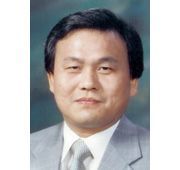
By Choe Chong-dae
Long ago, my fascination for the legendary painter Vincent van Gogh was raised by book No.3 in the series "Painting & painters, complete collection Western fine art," published by the Hankook Ilbo, a sister paper of The Korea Times in 1973. The book contains around 100 splendid reproductions of Van Gogh’s artwork; and all are accompanied with a very fine description written by Im Yeong-bang, Professor of fine art at Seoul National University.
Very recently, on November 9th, I had the pleasure of having been invited by His Excellency the Ambassador of the Kingdom of the Netherlands to Korea, Mr. Paul Menkveld, to a reception and a special tour of the exhibition “Van Gogh in Paris; A dialogue with Modernism” at the Hangaram Design Museum of the Seoul Arts Center. There were experts in fine art who explained the displays to a select group of invited guests and they did a good job. Moreover, I was very fortunate in also enjoying the kind explanations of the work of Van Gogh by the Dutch Ambassador himself.
The exhibition is being held from November 8th 2012 through March 24th 2013 and it is hosted by the Hankook Ilbo. It shows 60 works, including nine acclaimed self-portraits of the painter from his days in Paris between 1886 and 1888. During these two years in Paris, Van Gogh established his unique style of dynamic brush strokes and gallant use of bright color. And he developed drastically, transforming from a Realist painter who just followed a traditional painting style into a Modernist ahead of his time with a distinctive style that demonstrated contemporary trends of the French avant-garde.
Throughout his short life, Vincent Van Gogh (1853-1890) produced some 880 artworks, and about 100 of them were done during his Paris stays.
The exhibition highlights not only the collection of Van Gogh’s self-portraits but also landscapes and still life paintings. Van Gogh produced a great number of his self-portraits in Paris because he was too poor to hire a model. However, that has contributed to the formation of a distinctive style by studying the human figure and use of color.
For me, one of the most impressive paintings is the famous “Self-Portrait with Grey Felt Hat” that depicts Vincent van Gogh's in his early 30s. It is his most representative work, presenting diverse perspectives of the artist including his misfortunes expressed in the depressed face. A Reproduction of the famous portrait was printed on the front side of the invitation card that I received from the Embassy of the Netherlands.
Another is "Père Tanguy", a colorful portrait of a Parisian art supplier painted by Van Gogh in 1887; it depicts a progression in Van Gogh's artistic style after his arrival in Paris. It is a simple composition which is very advanced in style, skill and color and it integrates Japanese (Ukiyo-e prints) and Impressionist art forms. Unlike the self-portrait of Grey Felt Hat, the portrait of Père Tanguy inspires me through its serenity.
Van Gogh was mainly self-taught, and he was driven by an infinite desire and tireless efforts to observe the world around him. He learned a lot from zealously studying 19th century drawing manuals. Van Gogh’s life was full of vicissitudes and lacked any stability. Bluntly speaking, he was psychologically frail. But despite this turbulent life, Van Gogh pursued a clear artistic purpose throughout his career. He created images of great emotional intensity with showing his artistry through his use of color and mastery of composition.
The masterpieces of Gogh's artworks at the exhibition provided me with a valuable opportunity to peruse the artist’s creative range beyond his most familiar images.
Van Gogh, a great Dutch painter, is truly a legendary artist who paved the way for modernism on a global scale.
Choe Chong-dae is a guest columnist of The Korea Times and the president of Dae-kwang International Co., as well as a director of the Korean-Swedish Association. He can be reached at dkic98@chol.com.