Busan emerges as Korea’s coffee capital, fueled by champion baristas and coastal charm
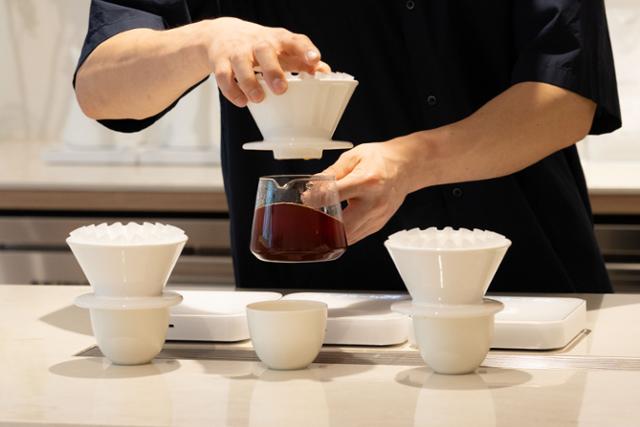
Aery Coffee / Korea Times file
“Take a sip of water first, then a shot of espresso. You’ll experience the aroma more vividly as it spreads through your mouth.” That’s the advice of barista Lim Jeong-hwan at Aery Coffee, one of the most talked-about cafes in Busan these days.
Lim’s espresso, made with competition-grade beans, bursts with fruity aromas and sweetness that challenge the stereotype of espresso as a bitter drink. Originally from Busan, Lim won the 2024 Korea National Barista Championship and placed fifth in the World Barista Championship. Coffee lovers now travel from across the country just to sample his creations.
Momos Coffee / Korea Times file
Busan is quickly earning its title as Korea’s newest coffee hotspot. Local baristas have made names for themselves in national and global competitions, and word of mouth has spread. The city is also geographically positioned for coffee excellence — over 90 percent of imported coffee in Korea clears customs through Busan Port, enabling rapid and cost-effective delivery of fresh beans. With subway access, visitors can easily reach many of the city's top cafes in just 30 minutes.
The rise of Yeongdo
Coffee served at Momos Coffee / Korea Times file
Roasting equipment at Momos Coffee / Korea Times file
Busan harbor is visible through the entrance of the Momos Coffee Yeongdo branch. Korea Times file
The city’s coffee boom began in 2007 with Momos Coffee in Bugok-dong, Geumjeong District. Its barista, Jeon Ju-yeon, won the World Barista Championship title in 2019, drawing coffee enthusiasts nationwide. In 2021, a second location opened in Yeongdo District.
Located in a converted shipping warehouse, the Yeongdo branch offers a full view of the coffee-making process, from roasting to brewing. With industrial-sized roastery equipment and a wide-open entrance facing the docks, the space blends cafe culture with Busan’s port-city aesthetic.
A signature drink exclusive to Yeongdo is Momos Candy, an approachable espresso-based drink with milk and yuja (yuzu) zest sugar cubes. The café also offers four core blends — Esschocolat, Fruity Bonbon, Busan and Mucho Berry — as well as seasonal blends and a broad range of single-origin beans. Coffee newcomers can explore their preferences by sampling the scent of each blend from small glass jars filled with ground beans.
Aery Coffee, run by last year’s barista champion
Colombia CGLE Las Margaritas Sudan Rume Natural espresso served at Aery Coffee / Korea Times file
Across the harbor in Jung District, Lim Jeong-hwan operates Aery Coffee, a four-story cafe right outside Jungang Station on Busan Subway Line 1. The must-try item here is the Competition Series, which features espresso and condensed milk lattes brewed with beans used in national and global championships.
Since last month, Lim has been using a rare bean: the Colombia CGLE Las Margaritas Sudan Rume Natural, known for its sweetness and floral aroma. Each cup is personally delivered to your table by a barista, who explains the origin, flavor notes and best drinking method.
Another standout is the Ethiopian Tamiru Aloo Anaerobic Natural bean, which offers a delicate profile with berry notes, followed by subtle yeast undertones. Aery Coffee emphasizes light extractions to preserve full flavor without overwhelming strength.
Yeongyeongjae, a bridge between tradition and modern coffee
Yeongyeongjae / Korea Times file
Yeongyeongjae / Korea Times file
Just a three-minute walk from Aery Coffee is Yeongyeongjae, a specialty cafe that blends traditional and modern influences. Housed in a building with a distinctive brick façade, they offer both premium coffee and traditional Korean beverages like nonalcoholic yuja makgeolli and hwangmaesil (plum) tea.
Its signature blend, 7:01AM, features dark-roasted beans from Colombia, Guatemala and India with a rich, nutty flavor and virtually no bitterness. The aroma resembles a nut-topped chocolate drink, and the texture feels like a smooth grain tea. Dessert pairings are encouraged here, especially their signature jar-shaped chocolate cakes filled with cream.
Seomyeon: the original cafe district and home to Blackup Coffee
Ego Signature served at Blackup Coffee / Korea Times file
Blackup Coffee / Korea Times file
While Yeongdo and Jung districts host Busan’s rising stars, the original coffee scene is in Seomyeon’s Jeonpo Cafe Street. Blackup Coffee, founded in 2006, is among Busan’s first specialty cafes and still stands strong after nearly 20 years.
Known for blends with lwo acidity and rich cacao notes, Blackup offers two signature blends — Nero and Mono — as well as a rotating seasonal blend called Ego, with more vivid and distinct profiles. The Seomyeon flagship is the only location that serves the Ego Signature, a nonalcoholic cocktail designed to amplify the blend’s qualities.
Baristas at Blackup prepare drinks directly in front of customers at the bar, explaining each ingredient and technique as the beverage comes together. The current Ego Signature is based on the fruity and citrusy Twenties blend, mixed with yuja, coconut and lemon zest, brewed via immersion with coconut water.
At Month Coffee Bar, conversation flows with espresso
Month Platter served at Month Coffee Bar / Korea Times file
Month Coffee Bar / Korea Times file
Located on the edge of Seomyeon District, Month Coffee Bar heart is its bar counter, where customers often engage in casual conversations with baristas. The cafe is known for its intimate atmosphere and serious coffee focus.
Its owner, Moon Heon-gwan, is the 2022 World Cup Tasters Championship winner. Each month, he selects a new bean to feature in the Month Platter, a trio of espresso, latte and filter coffee. The set allows patrons to appreciate how the same bean can express widely different flavors, depending on the brewing method.
Coffee with a sea breeze in Gwangalli
Hytte Roastery / Korea Times file
Hytte Roastery / Korea Times file
Hytte Roastery / Korea Times file
Those visiting Busan for its beaches need not choose between ocean views and quality coffee. Just 100 meters from Gwangalli Beach is Hytte Roastery’s Gwangalli branch, one of several locations around the city.
While its filter coffee menu is consistent across all branches, the espresso offerings vary by location. Hytte Roastery is known for light roasts that highlight the beans’ natural characteristics, served in cozy, home-like settings.
Popular blends include the citrusy Ethiopia Flower Blend, the balanced Hi, Hytte Blend, and the mellow yet distinctive Fukuoka Blend. Only at the Gwangalli location can visitors sample the aroma of every in-house blend.
Also near Gwangalli is Oas Roasters, another specialty caf known for its broad selection of beans and creative desserts. Favorites include the Geisha Tiramisu and Geisha Gelato, both made with the rare and prized Geisha coffee bean.
Geisha gelato and tiramisu served at Oas Roasters / Korea Times file
This article from the Hankook Ilbo, the sister publication of The Korea Times, is translated by a generative AI system and edited by The Korea Times.