New book debunks taboo issue of menstruation
By Jin Yu-young
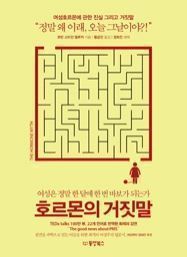
"The Hormone Myth: How Junk Science, Gender Politics, and Lies about PMS Keep Women Down" by Robyn Stein DeLuca
Although many aspects of female empowerment have made significant progress in recent decades, stigmatization against menstruation remains prevalent: from young girls who are taught to be scared of their periods to older women who are no longer deemed desirable after menopause, women still face prejudice at every stage of menstruation.
To shed light on the taboo issue of menstruation and its social connotations, Robyn Stein DeLuca breaks apart the many stereotypes against women and highlights the dangers of having such prejudices in “The Hormone Myth: How Junk Science, Gender Politics, and Lies about PMS Keep Women Down.”
The book was recently translated into Korean by Hwang Geum-jin of Sookmyung's Women's University.
Popular culture has promulgated the public shame of menstruation. When a woman expresses negative emotions such as stress and anger, they are often attributed to hormonal fluctuations and therefore are disregarded, trivialized and even dehumanized.
“In all its uses, the menstruation accusation effectively invalidates someone's emotions or opinions by making [it] synonymous with moodiness and unreasonability,” she writes.
DeLuca also mentions how these prejudices hinder the advancement of women in the workplace by stating, “when people think that menstruation affects women's abilities to be rational, competent beings, it is easier to justify limiting their access to powerful positions.”
The author discusses how pregnancy manifests into the perception of inability.
By viewing a pregnant woman as involuntarily susceptible to her body's changing hormones, she is seen as emotionally volatile and incapable of making rational decisions. Due to these misconceptions, pregnant women often have difficulty in the workplace where their competency is questioned. Additionally, there have been reports to suggest that some expecting mothers prolong or minimize adjustments to their work schedules out of fear of pregnancy discrimination.
Even in the 21st century, our world strongly emphasizes youth as a key component of a woman's attractiveness. Consequently, many women who hit menopause experience a dive in self-esteem. DeLuca urges those approaching or who have already approached this stage of life by providing several benefits of aging: no more periods, no chances of unwanted pregnancy, and the freedom to be assertive without being dismissed as a woman subject to her menstrual cycle.
Despite the ongoing stereotypes, there are possible ways to break out of the hormone myth. For example, acknowledging anger and sadness as not only natural but also acceptable will give women the liberty to display their emotions without retribution. Another is to help prevent postpartum depression by increasing social support and providing proper treatment during pregnancy. Through her work, DeLuca not only educates about the fallacies associated with the menstrual cycle, but also inspires women to accept and celebrate the ubiquitous and biological happenings of menstruation.
Jin Yu-young is a Korea Times intern.