Don Quixote's value still holds
By Park Jin-hai
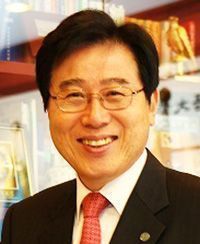
Park Chul, former president of Hankuk University of Foreign Studies (HUFS)
This year marks the 400th anniversary of the death of Miguel de Cervantes, one of the greatest writers of all time and the most renowned writer in the Spanish language, who is known for his novel “Don Quixote.”
Park Chul, the former president of Hankuk University of Foreign Studies (HUFS) and one of Asia’s leading Cervantes scholars, took turns with dignitaries from Spanish diplomatic circlesto read out their favorite pages of Don Quixote, on World Book Day, which fell on April 23. it was the celebration in honor of the deaths of two great authors — Cervantes and William Shakespeare, whose 400th anniversary is also celebrated this year .
Park says Don Quixote, which has become a symbol for someone exceedingly idealistic and reckless, has long been neglected and underestimated in Korea and elsewhere in the world.
“It has been only recently that we began to pay renewed attention to this tall, thin and fancy-struck Quixote. In fact, compared with Japan and China, Korea has been one of the latecomers in the studies of Cervantes and Don Quixote,” said Park. “Quixote has been portrayed as an out-of-mind knight-errant in search of adventure up until the 19th century. But nowadays, Quixote is getting to be interpreted as a prototype of a man who fights for justice and freedom.”
“He is a knight who doesn’t compromise with injustice. He says in Part 2 that freedom is the most precious gift from Heaven and that man is not made from his blood but from his sweat. What the book really says is that one should be able to live his life for freedom and honor,” he added. “That is why I believe Quixote is not a dead character in the book but a living one that is still valued and gives lessons to the people of today. That is also why I say young students should read the novel early on,” he said.
Park first published a Korean translation of Part 1 in 2009 and completed the second part last year, becoming the first Korean to publish a complete version of Don Quixote directly translated from Spanish into Korean.
In recognition of his Cervantes studies, Park became a permanent member of the Royal Spanish Academy in 2009. Since inaugurating the Korea Center for Cervantes Studies in Suseo, southern Seoul, last November, he has focused on spreading the spirit of Don Quixote, by visiting universities and giving special lectures on the Spanish author each month.
“I wish to see leaders of our society such as politicians and ministers recite the words of Cervantes and Shakespeare some day. Showing themselves getting near to those great authors itself would mean a lot,”Park said.